No 3 – The Agony – Score
Stainer – The Crucifixion – No 2 The Agony
1
No 3 – The Agony – Score
Faith is born through Bach and the sounds of the silence of nature
By Theo Coggin
She had been “a very naughty little girl”. Her mother had come up with the perfect punishment for a 10-year old inquisitive and intelligent youngster, the only girl of three siblings. Held firmly by the hand, she was marched down the aisle of the imposing Pietermaritzburg City Hall. She was led to a seat next to someone she knew. Her mother bade a fond farewell and retreated up the aisle to join the choir on stage of which she was part and that was singing in the concert on that day. Meanwhile the bright-eyed Uschi Wellmann took in the sight of the majestic organ pipes that attracted her immediate attention. Before her eyes, the stage came to life with a choir and orchestra, ready to perform JS Bach’s Christmas oratorio. Uschi sat spellbound, entranced by the sound of “A” on the oboe as the orchestra tuned their instruments.
And then the conductor! Clad in traditional black tails and bowtie, he strode on to the stage, orchestra and singers alike standing in respect and to welcome him. The applause from the packed audience swelled to greet him. As he stepped on to his podium, baton at the ready as he raised his hands, the audience fell silent. Singers and orchestra alike were united in their focused attention on him.
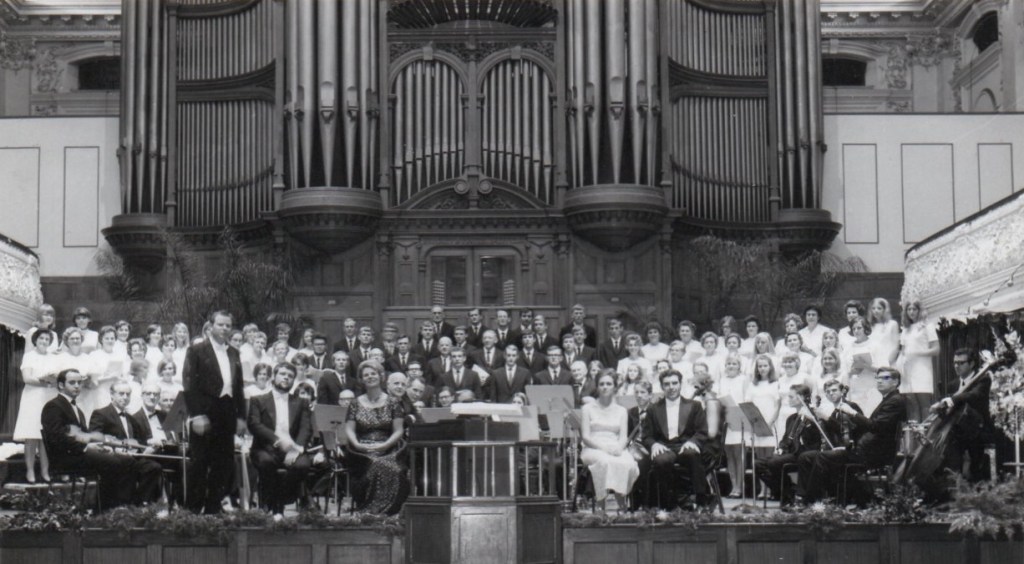
The timpani drums started their roll, closely followed by the flutes and oboes. “I thought I was being transported to heaven,” Uschi fondly recalls. It was an experience in complete contradiction to the “punishment” her mother had intended.
Uschi was no stranger to music. The daughter of a Lutheran pastor, Wolfgang Weissbach, and his wife, Sieglinde who was just as faithful as he was to his calling, Uschi grew up in a missionary environment in Esibongweni, near Denny-Dalton in northern KwaZulu-Natal. Not only was the family devout, but the music that filled her life from an early age had a deep spiritual influence on her. There were no large pipe organs. No orchestras.
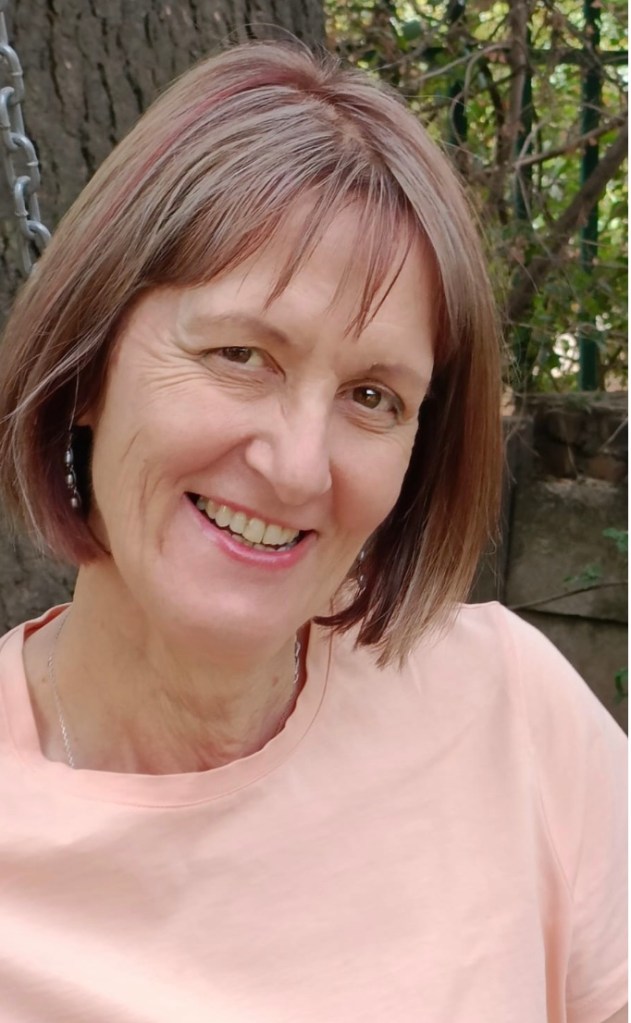
But there were choirs! Choirs of the sort that are unique to Africa. If one has grown up in such remote places where people abound, the sound of voices singing in beautiful harmony is part of life. And when that music stops, there is the sound of the “silence” of nature – its own “spiritual music”.
It was in this environment that Pastor Weissbach ministered “in the church on the hill” and, as all little girls do, Uschi played with the other children in the community and was soon fluent in isiZulu and her home language of German.
Then came a move to Wartburg with its predominantly German-speaking congregation. On arriving in the small town, she was immediately struck by a congregation of white people. It was a huge culture shock. At the time, she spoke isiZulu more fluently than German, and English was unknown to her. She even had to stop her beloved ballet classes to attend extra English lessons, so she could catch up with her peers!
Another culture shock came when she heard the congregation singing in German to the accompaniment of the huge range of sounds from the pipe organ – from the highest of bird-like sounds to the deepest growls of nature. So intense was her fascination of the organ that she would often creep into the church while it was being practised. As quietly as possible, she would curl up at the foot of the pipes, captivated as much by the rumbling vibrations of the low notes as by the romantic call of the organ’s harmony emerging from its range of pipes.
Thus her faith in the Gospel that her Dad preached and her interest in music grew, although she regrets that she did not learn to play the organ. Her Dad was a kind father to her and her brothers, George and Ulrich. She recalls an occasion for which he might have been criticised as a pastor for allowing his young daughter to sit at his feet as he spoke to a parishioner. But that epitomised the love in which the family grew up. It also perfectly describes Uschi’s own attitude to life. It was hardly surprising, therefore, that she trained to become a nursing sister, a profession that she has practised all her working life.
As she grew up and headed towards Grey’s Hospital Nursing College in Pietermaritzburg, music remained part of her life. After all, she was a girl of the Beatles era. She sang in choirs made up of nurses of every race. One can picture Uschi, a tall, graceful and dignified woman, in her nursing sister’s uniform, singing in the choir as it moved from ward to ward on Christmas Eve as is the nursing tradition. There were carols set to familiar German tunes, like “Silent Night”, as well as a plentiful array sung in isiZulu.
Those carols, hymns and religious works that Uschi sung have enabled her to cope with many of life’s challenges. Whether she is travelling through one of the valleys of life, or blissfully happy, it is music that fills her soul and, she hopes, radiates from her personality.
JS Bach’s music in particular gives her comfort and reassurance; it reinforces what she learned as a young girl, “sitting alone” in the vast crowd in the Pietermaritzburg City Hall, hearing her first oratorio, as well as the lessons from her mother and father.
“It is when I hear beautiful music that I am firmly reminded of my faith and convinced of its relevance. Such music reassures me and underlines the great truths of the ages that decency, loving-kindness and caring for all of humankind is what matters. That is the recurring message I was taught at home, in my profession and in singing – especially singing the compositions of the great composers of every age, from Palestrina to Rutter, and of course, the master of them all, JS Bach.”
That is why Uschi has been a faithful member of the sopranos of the Johannesburg Bach Choir for many years.
The basses sit directly opposite the sopranos in the JBC. At its final practice in 2024, this writer looked across from his seat and thought there was someone missing among the sopranos. Then he realised: Uschi wasn’t there. Then he remembered that Uschi has retired from her matron’s position at St Andrew’s School in Bedfordview and moved to become the matron at Paulpietersburg Christian Retirement Village in northern KZN. Uschi will be missed – but there is little doubt that the music of her life will continue.
Please download and complete this form to order your choice of photoss. It should be sent, with proof of payment, to Allen van der Linde, email: 456@worldonline.co.za
Ecclesiastical, environmental, euphonious – gifts of a full life
By Monde Ngwane
Bishop Peter Lee and his wife, Revd Gill Lee, met in their 20s while they were both living in England. Gill is from central London and Peter comes from the deep countryside of Norfolk, known for its “open, flat, beautiful” land. Peter’s upbringing included boarding school, leading to an exchange year in the mid-1960s in New England, USA, where he participated in a glee club choir. He describes this experience as “an overflow of a folk culture”, contrasting with his preference for classical choral music from a young age.
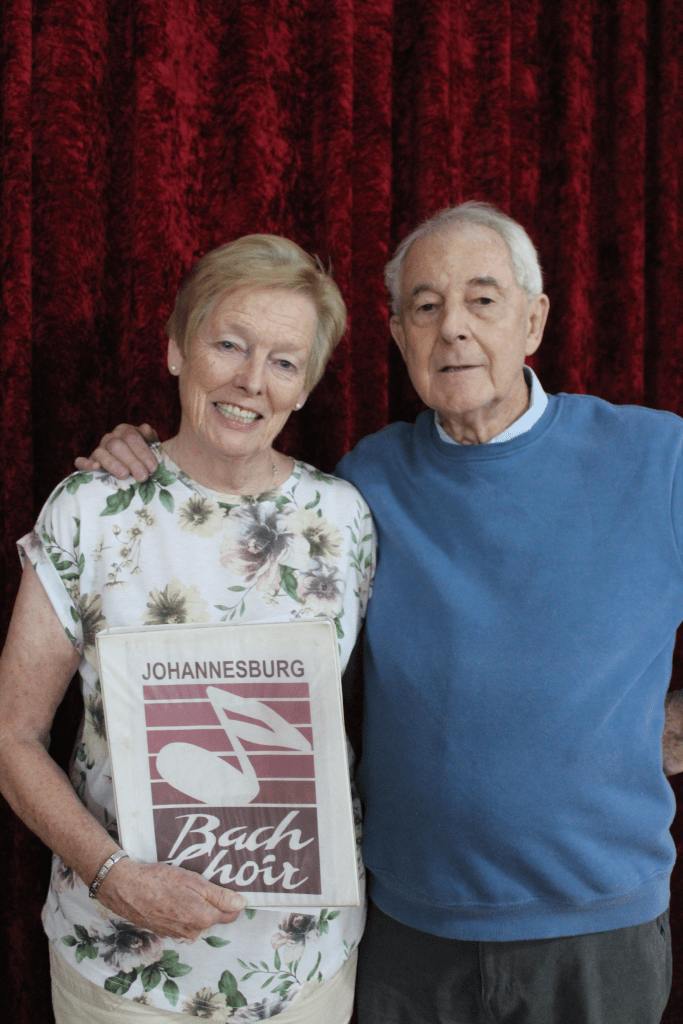
Peter’s path to ministry led him to become an ordained priest in London in 1973. He and Gill moved to South Africa in 1976, an historic year in which to change countries. Peter served at Christ Church, Addington in Durban. In 1980, they moved to Johannesburg and found themselves living amid the turmoil of the time as the Church sought to minister to those involved in overthrowing South Africa’s oppressive apartheid regime. Peter was drawn into (then) Bishop Desmond Tutu’s diocesan structures from 1985, serving Orchards, Alexandra, Yeoville and the Diocese of Johannesburg’s headquarters.
Chosen as the first black Archbishop of the Anglican Church of Southern Africa in 1986, Tutu was a significant figure against apartheid and a Nobel Peace Prize laureate. In 1990, Peter was consecrated Bishop of the Diocese of Christ the King in the southern parts of Johannesburg and Gauteng. He became a member of what was called “Tutu’s kitchen cabinet”, a team of trusted bishops that provided support and guidance during the national crisis.
Gill speaks French fluently and pursued a teaching career before marrying Peter in 1971. She was head of French at St Mary’s School, Waverley in Johannesburg, from 1990 to 2010 and then became the school chaplain. She was ordained a deacon in 1994 and a priest in 1995 by Peter. She served at St Mary’s but also as a priest of the Diocese of Christ the King. Despite arthritis limiting her guitar playing, she remains involved in choral singing.
Gill joined the Johannesburg Bach Choir in 2018 as a soprano, inspired by fellow soprano Jennifer Thornton-Smith. Peter, a tenor, would initially accompany Gill to rehearsals. But he joined during the COVID-19 pandemic, finding joy in participating without a leadership role. Their clerical lives are intertwined with their musical interests. Gill, who is at present secretary of the JBC management committee, has improved her music sight-reading skills and both agree they enjoy works by Handel and Bach in particular.
Gill describes the JBC’s focus on classical and Bach music as “a rarity among amateur choirs in Johannesburg”. Peter emphasises that music reflects and shapes society. He says that the choir’s evolving and diverse membership is a sound reflection of South Africa’s transition, adding that a younger and more diverse membership will be important for the choir’s long-term relevance. The couple’s grandson, Sam, attends the Drakensberg Boys’ Choir School and travels with their choir, showcasing a musical legacy passed down through the family. Peter and Gill hope the JBC continues to provide high-quality period music while representing a modern diversified society.
Peter enjoys the discipline of singing, which is a crucial part of his identity. Gill relishes the challenge of singing difficult pieces, with a rewarding recent performance of a challenging piece by CP Bach that she has unfortunately forgotten. They cherish the community and camaraderie in the choir, physical limitations of the members notwithstanding, with memorable moments including Christmas parties at choir director Tim Roberts’ home.
As with others in the choir, they love the South African “bush”. They say, “Nothing is better than getting up and going birding.” Gill also crochets and served as a director for a timeshare company.
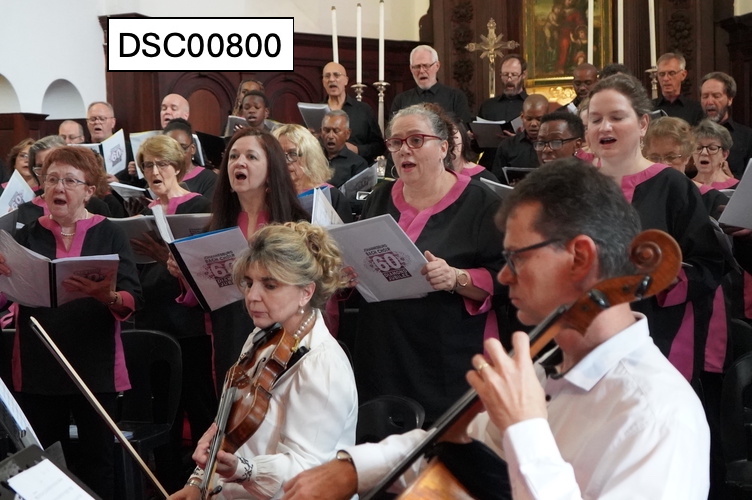
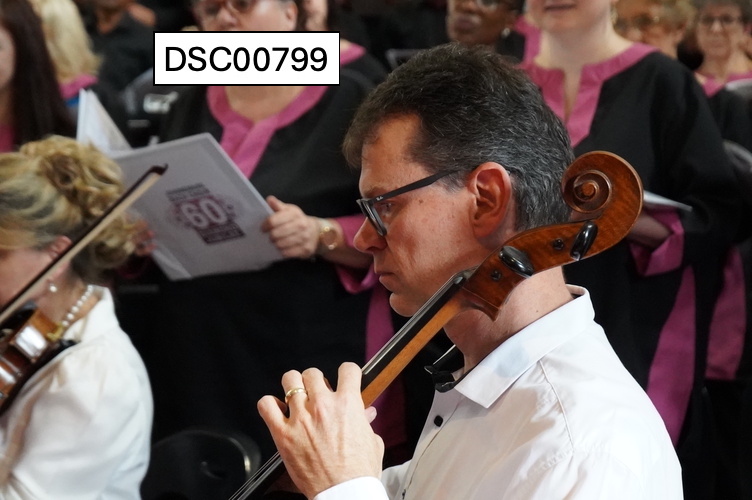
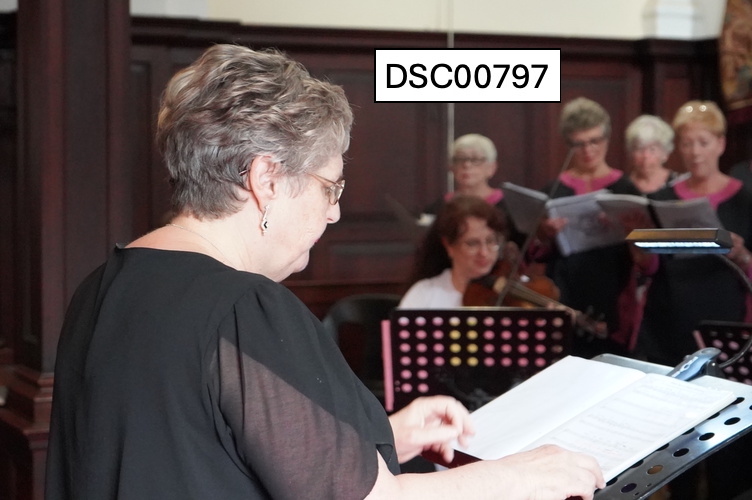
 The Johannesburg Bach Choir