By 1974, after ten years of public performances, the Johannesburg Bach Choir was firmly established as a leading independent amateur choir, capable of high musical standards. It attracted new singers and regularly captivated a faithful and growing audience in the Johannesburg City Hall.
The original reason for the formation of the choir _ to perform the lesser known works of J.S. Bach, especially the cantatas _ was still relevant, but choir performances now included a much wider range of choral music.
Television, although transmitted for a only few hours a day, began to divert audiences from other forms of entertainment, but did not then offer a serious alternative to live musical performances or theatre.
In Johannesburg there were two other large choirs giving public concerts: the SABC Choir, closely linked to the SABC Orchestra, and the St Stithian’s Singers. The choirs of the universities of the Witwatersrand and Pretoria were mainly concerned with varsity functions, but Pretoria had many active choral groups.
Keeping the Johannesburg Bach Choir functioning, rehearsing regularly, performing publicly twice a year and solvent, required an active management team whose duties became more arduous when Tony Fell handed over to John Mitchell. Fell made most decisions for the choir himself and carried them out as well, whilst employed as manager of a large firm of printers. Mitchell was a professional musician working full-time for PACT in Pretoria.
He had a wide range of musical responsibilities at PACT, including training singers and soloists for the opera, acting as repetiteur for the ballet, rehearsing the PACT orchestra and organising and participating in musical tours to schools. John Mitchell was content to leave the running of the choir to a management committee, while he applied his skills to selecting the works to be performed, rehearsing the choir and conducting its concerts.
This separation of responsibilities of musical direction and choir management may not have been unique to the Johannesburg Bach Choir, but it has worked well and proved very beneficial. A strong and independent management team has been a characteristic of the choir and has been important in its growth and development.
The 1974 management committee consisted of:
| Chairman | Ken Fuller |
| Conductor | John Mitchell |
| Assistant Conductor and Choirmaster | Tony Olds |
| Secretary | Elizabeth McDonald |
| Treasurer | Jill Ackerley |
| Section Leaders: | Representing each vocal section |
A successful choir must satisfy the musical needs of its singing members, as well as the ambitions of its conductor. To do this, it must give regular concerts, sing well and perform music which appeals to a large audience. One might say that the purpose of a choir is only fully justified when a successful concert is given. The financial ability to present public concerts therefore becomes of paramount importance to the existence of a choir. Lack of money is a constant headache to the management.
The Johannesburg Bach Choir was started without any financial support other than the subscriptions of members. Fortunately, costs of the early concerts were minimal:
– Music scores were borrowed very economically from the Johannesburg Public Library; in some instances the Library bought scores specifically for the choir.
– The first concerts were given in churches which usually required only a small donation to church funds.
– Money was required mainly to hire the few orchestral players and professional vocal soloists necessary, so the cost of a concert was often covered by the price of admission.
After ten years of regular public performances, it is estimated that the choir had accumulated about R5000. By now the choir had increased in size and had developed the desire and ability to perform major choral works requiring large musical forces. The Johannesburg City Hall was the most suitable venue for this type of concert. However, performance costs increased significantly when the choir started to give regular concerts there, since:
– Commercial rates applied to the hire of the City Hall for rehearsals and performances.
– Many more professional orchestral players and vocal soloists were engaged, as these professional musicians guaranteed the best results at a performance.
– Orchestral scores were sometimes unavailable and had to be hired or bought from overseas.
– Costs were incurred for concert advertising, publicity, posters and programmes.
It became vital to attract large audiences to concerts in order to cover costs and, it was hoped, to make a profit. A fairly successful method was devised for this:
– A mailing list of Bach Choir supporters was produced and a discount was offered to those buying tickets by mail.
– Each choir member was exhorted to sell a quota of tickets at discounted prices.
– Extensive advertising and publicity was undertaken and tickets were sold through Computicket.
A great deal of hard work went into concert promotion, and the choir was fortunate not to become financially embarrassed. Small losses were occasionally incurred, but, generally, efforts to sell tickets were rewarded by an appreciative audience, large enough to cover costs. The music critics also played an important part in the success of the choir. Whilst not always complimentary for a variety of reasons, their comments were eagerly anticipated and often welcomed.
The Johannesburg Bach Choir owes a debt of gratitude to its former treasurer, Jill Ackerley, who devised a straightforward accounting system which allowed easy cost control and who also preserved the choir’s archive from which this history is mainly derived.
1975
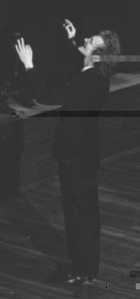
The influence of the new conductor, John Mitchell, can be seen in the choral works of the Easter concerts, given at St Mary’s Cathedral, Johannesburg and St Alban’s Cathedral, Pretoria.
The programme, entitled “English Church Music through the ages”, included works by early English composers:
| Mass – The Western Wind | Taverner |
| Mass for Four Voices | Byrd |
| The “Bell” Anthem | Purcell |
| For contrast, Mitchell included two 20th century pieces: | |
| Mass in G Minor | Vaughan Williams |
| Cantata – “Rejoice in the Lamb” | Britten |
Peter Bebington, organist, played Herbert Howells’ two Psalm Preludes. Mitchell and the choir received very favourable press comment.
For the October 1975 concert, the choir returned to the Johannesburg City Hall to give its first performance of the Requiem by Gabriel Fauré, with soloists Ann Hamblin, soprano, and Lawrence Folley, baritone. Other works in the concert were the Kyrie and Gloria from the Mass for six voices, `Tu es Petrus’, by Palestrina and Bach’s Cantata No. 92, `Nun danket alle Gott’. Antoine de Ley was the soloist in the Trumpet Concerto by J.N. Hummel.
1976
On 24 May, the choir gave its first complete performance of the Mass in B minor by J.S. Bach in the Johannesburg City Hall. The Star’s John Davis wrote under the headline:
“Bach full house as the Box is left in the shade
Bach can draw crowds, as a house full to overflowing showed. The counter-attraction of the Box and the deterrent of a cold evening did not keep the crowds away from an attractive production. Conductor John Mitchell, ensconced behind a small harpsichord, was not always in full control of the large choir, orchestra, organ and soloists, especially when seated at the keyboard.”
The soloists were Ann Hamblin, Dilys Lloyd, Stella Beder, Sjoerd Beute, and Bruce Martin. The orchestra was led by Leif Hansen. Principal oboe player, Gerrit Bon, used an oboe d’amore, specially imported for the concert at a cost of R1200.
During September and October, the Choir gave three performances of Handel’s Messiah – twice in the Johannesburg City Hall and once in the Old Mutual Hall at UNISA in Pretoria. John Mitchell used the Watkins-Shaw edition which is a reconstruction of the original, in an attempt to perform the work as Handel would have heard it. The critics were not enthusiastic, writing that the choir was lethargic and the concert, which was recorded for TV by the SABC, was too long. The complete score is very long and most performances have cuts, but John Mitchell gave an almost complete presentation.
1977
The June concert performed in the Johannesburg City Hall consisted of Brahms’s German Requiem, his Academic Festival Overture and the modern American composer Aaron Copland’s `In the beginning’, written in 1947 for mezzo-soprano and chorus. John Davis, the music critic of The Star, commented under the headline
“Bach Choir ready to tackle anything
The name Bach Choir is rather misleading because this choir seems to be willing and often able to tackle anything in the choral repertoire in addition to Bach.”
In November, the choir performed twice with the OFS Brass Ensemble, led by Roger Penning. A concert was given first in the Johannesburg City Hall and then repeated, on St Cecilia’s day, in St Alban’s Cathedral, Pretoria. The varied programme consisted of:
| Motet, Lobet den Herrn | JS Bach |
| Music for His Majesty’s Sackbuts and Cornetts (OFS Brass) | Locke |
| Hymn to St Cecilia (Ann Hamblin soloist) | Britten |
| Battle Suite (OFS Brass) | Scheidt |
| Mass for Four Voices | Bryd |
| Christmas Cantata with organ accompanied by Errol Girdlestone and the OFS Brass | Pinkham |
Margaret Nabarro, writing in The Star, said: “This was a stimulating concert and a very suitable tribute to both the patron saint of music, St Cecilia, and Benjamin Britten who died just about a year ago. Mitchell displayed to superb advantage Pinkham’s contrapuntal scoring. The scintillating rhythms, the timbre of voice and brass instrumentation and the forceful `allelujahs’ gave the work poise and integrity.”
A recording of this concert indicates that the audience particularly enjoyed the Pinkham and gave the performers a vociferous ovation.
1978
A performance of the Mozart Requiem, the Gloria by Vivaldi and a concerto for oboe d’amore by Telemann was given in the Johannesburg City Hall on 12 June. Vocal soloists were Ann Hamblin, Stella Beder, Sjoerd Beute and Rouel Beukes, with Gerrit Bon playing the oboe d’amore. The conductor was John Mitchell and the critics were impressed. John Davis of the Star wrote:
“Choir shows its quality.
The choir has progressed considerably since its modest beginning in 1964, not only in repertoire and size but also in its standing musically.”
Harold Steafel of the Rand Daily Mail had a headline “100 of the best”, referring to the number of singers on stage and continued:
“This concert had some of the best choral singing that has been heard here in a long time, even admitting a slight loss of pitch of some of the soprano topmost notes.”
The choir’s second concert in 1978 was conducted by Robin Walton who had accepted the position of choirmaster in place of Tony Olds, who had been transferred to Nelspruit. The main work was Benjamin Britten’s `Saint Nicholas’ Cantata, with the well-known Manuel Escorcio as tenor soloist and boy trebles and a girls’ choir from St Andrew’s School. The `Saint Nicholas’ Cantata was acclaimed, but the other two works in the concert, Handel’s Coronation Anthem `My heart is indicting’ and Brahms’s Liebesliederwaltzer, were not well performed. This was Walton’s first outing with the Choir. At the time he was a lecturer in music at the University of the Witwatersrand and the church organist and choirmaster at St Michael’s Church in Bryanston, as well as being involved with the Wits Choir. His friendly disposition, musical knowledge and easy authority made him quickly acceptable to the singers. It is assumed that John Mitchell’s commitments to PACT prevented him from taking part.
1979
Mitchell was back with the Choir conducting Bach’s Mass in B minor at the Johannesburg City Hall, repeating the performance of 1976 to great acclaim. John Davis wrote:
“Such an enormous work with its majestic power took some handling and John Mitchell experienced some occasional problems in handling a largish choir, orchestra, soloists and organ. But there were some excellent moments starting in the chorus `Cum Sancto Spiritu’ when there was a definite feeling that all performers had immersed themselves emotionally in the work.”
At this time the SABC orchestra invited a number of international conductors to give concerts in Johannesburg, one of which was the British conductor Maurice Handford. He was associate conductor of the Hallé Orchestra, principal conductor of the Calgary Philharmonic Orchestra and had been chief conductor of the SABC Orchestra in 1977. Handford was a renowned choral director and conducted The Dream of Gerontius by Edward Elgar in the Johannesburg City Hall on 5 September. Manuel Escorcio, tenor, who was to have sung the role of Gerontius, was taken ill and Sjoerd Beute replaced him at short notice with distinction. The other soloists were Jean Allister (soprano), and Gwilym Evans (bass). The SABC Choir no longer existed; so the Johannesburg Bach Choir combined with the St Stithian’s Singers under their choirmaster, Roger Davies, to sing the choruses. According to John Davis, the performance was “Masterly and unforgettable.”
1980
Maurice Handford must have enjoyed the choral resources available in Johannesburg, for in April he conducted the Bach Choir and St Stithian’s Singers in a performance of Verdi’s Requiem, with local soloists and the SABC Orchestra.
In June the choir joined a festival of music in Pretoria at St Alban’s Cathedral and sang some of Anton Bruckner’s `Geistliche Chöre’ motets with John Mitchell conducting.
This was the last time for some years that Mitchell conducted the choir as he left the PACT organisation and continued his musical career with the University of Natal in Pietermaritzburg.
The choir’s last concert of 1980 was a programme entitled `Four Centuries of Choral Music and Music for Wind Instruments’ given in the Johannesburg City Hall on 3 November under the baton of Robin Walton. The works performed were Bach’s Motet No. 4 for double choir, `Fürchte dich nicht’ (Be not afraid), with Peter Bebington as organ continuo. This was followed by a brass ensemble playing music by the early baroque composers, Gabrieli, Banchieri and Pezel. The choir and the brass combined for Stravinsky’s Mass for mixed choir and double wind quintet. Then came Bruckner’s six motets from the `Geistliche Chöre’ and a trio for two oboes and cor anglais, Opus 87, by Beethoven. The concert ended with the Deutsches Magnificat by Heinrich Schütz for eight voice parts, instruments and continuo.
The choir and conductor were congratulated for their versatility by John Davis, who wrote in the Star: “Although the Stravinsky Mass was well worth the airing, the most impressive interpretation for me was the six motets by Bruckner. The `Ave Maria’ was the most beautifully sung while the `Offertorium’ with its three trombone backing was well placed for contrast before a delightful `Locus Iste’. Finally the Deutsches Magnificat with organ and wind instruments provided a noble ending to a concert that contained many surprises and a good range of vocal expression.”
Interestingly, the concert programme, which cost 40 cents, contained the following details of the Johannesburg Bach Choir:
Choir rehearsals were now held at St Katharine’s School, Parktown.
- Patron: Tony Fell
- Conductor: Robin Walton
- Guest Conductor: John Mitchell
- Accompanist: Shirley Woods.

1981
For an Easter concert in the City Hall in March, Robin Walton conducted an all-Bach programme. The choir sang the Easter Cantata, `Christ lag in Todesbanden’ and the Motet No. 3, `Jesu meine Freude’, both works from the repertoire. Other items were the Suite No. 2 for flute and strings, soloist Leslie Shiells, and an organ solo, Fantasia and Fugue in G minor, played by Peter Bebington.
In August, Maurice Handford returned to conduct Carmina Burana by Carl Orff with the SABC Orchestra, the Bach Choir and the St Stithian’s Singers and a junior choir from Roodepoort High School. Handford had just the right personality and enthusiasm to inspire the performers and a packed audience voiced its approval in the Johannesburg City Hall.
The programme included the names of the Bach Choir members singing in the concert and showed two choirmasters – John James and Weiss Doubell.
Earlier in the year, Robin Walton had agreed to relinquish the musical direction of the choir and a new conductor was sought. There being no obvious choice, the management team requested suitable candidates to take choir rehearsals for the forthcoming Carmina Burana concert and after a suitable trial period, the choir members would choose their future conductor. The two final contestants were John James, a principal horn player with the SABC Orchestra, and Weiss Doubell, musical director of the Roodepoort Civic Theatre. Weiss Doubell emerged as the clear favourite and became the new conductor.
Doubell’s first task was to rehearse the choir for two performances of Handel’s Messiah which were given at the inaugural season of the Pretoria State Theatre with the PACT Symphony Orchestra and Choir. John Mitchell conducted the concerts for PACT using the Watkins-Shaw version. While the critics were impressed with the acoustics of the new opera auditorium and the clarity of the music and words, they rejected Mitchell’s efforts to `improve’ the Messiah with over-elaboration and decoration of the vocal lines. One headline read “It’s the Messiah according to St Mitchell”.
Names of members of the Johannesburg Bach Choir printed in the Carmina Burana concert programme of August 1981
| Sopranos | Altos | Tenors |
| Diane Attwood | Vicky Benjamin | Antony Bastiman |
| Jill Ackerley | Pam Blundell | Martin Blades |
| Rixa Beutel | Joan Coppin | Neville Boyce |
| Geraldine Blecher | Fiona Crowe | Chris Everett |
| Almut Britz | Pat Fantl | John Hewitt |
| Glenys Earle | Inge Fuller | Johannes Leichter |
| Valerie Edminson | Fiona Garvey | Brian Loveday |
| Caroline Garvey | Elizabeth Gill | Donald Macey |
| Jean Greig | Milja Harper | Mike MacMurray |
| Marie Howard | Jean Hart | Leonie Nel |
| Shiela Hunt | Rita Hefftner | Colin Roberts |
| Muriel Irish | Fiona Henderson | Lawrence Rochford |
| Avril Kerrod | Rosemary Henley | Lawrence Russell |
| Kay Lindsay | Laïla Hugow | David Thorpe |
| Elizabeth Macey | Barbara Hurst | Don Williams |
| Angela Maskew | Jenepher James | |
| Jeanne McKie-Thomson | Angela Lloyd | Basses |
| Laurian Michalson | Kathy Mabin | Bill Adams |
| Gwen Nicholson | Sue Matterson | Phillip Atkins |
| Gail Putnam | Pat O’Toole | Henry Blagden |
| Anna Ramsay | Sue Roberts | Robert Charlton |
| Marguerite Rich | Marie Rochford | Paddy Donnelly |
| Barbara Russell | Barbara Rosenberg | Ken Fuller |
| Annette Schmid | Sybil Simon | Peter Hart |
| Pam Sutherland | Christine Sinclair | Bernhard Hefftner |
| Ann Taylor | Linda Toms | Theodore Homdrom |
| Barbara Thorpe | Jill Traill | Bill Ingram |
| Pat Thorpe | Janet Voight | David Kinghorn |
| Noreen Wallace | Roberta Welch | Phillip Lloyd |
| Pat Wark | Celia Young | Paul Loveday |
| Elizabeth White | Mike Martinson | |
| Diane Whitman | Jo Nietz | |
| Christine Woessner | Theo Oettle | |
| Shirley Woods | Edwin Ralph | |
| Athol Robertson | ||
| Richard Sudweeks | ||
| Barry Sweet | ||
| Ted Tatham | ||
| Keith Wridgeway |
1982
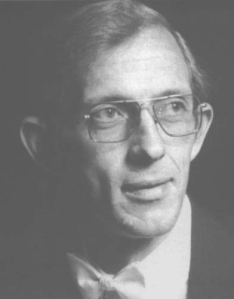
Weiss Doubell was a seasoned musician when he came to the Johannesburg Bach Choir. He was Director of the Roodepoort Civic Theatre and Musical Director of the Randburg Chamber Orchestra. He had studied in Hilversum, Hamburg and Berlin where he specialised in the practice and performance of Baroque music.
His first concert was at Easter when he conducted a complete version of Bach’s St John Passion in the Johannesburg City Hall. This was the first time the Choir had performed the work, and Doubell insisted on an uncut version which was appreciated by a full house and the music critics. Vocal soloists included the redoubtable Sjoerd Beute as the Evangelist, Werner Nel, André Howard, Deon van der Walt and Charl van Heyninghan.
In a later concert in November, in honour of Haydn’s 250th anniversary, Doubell conducted the choir in a performance of Haydn’s `Nelson’ Mass, Bach’s Cantata No. 140, `Wachet Auf’, and Eberhard Künkel was the soloist playing an organ concerto by Haydn.
Michael Traub, writing in the Citizen newspaper, complained of “an unwieldy Bach Choir” in the Bach Cantata, but concerning the Haydn Mass, wrote as follows:
“Conductor Weiss Doubell had complete control of the orchestra and choral forces and all revelled in the splendid melodiousness of the music. The Haydn is a masterpiece and came across as such.”
The choir repeated the Haydn Mass in the Johannesburg Catholic Cathedral of Christ the King as part of the regular service on the following Sunday to organ accompaniment.
The Bach Choir’s final concert in 1982, conducted by Weiss Doubell, was as part of the opening festival of the Linder Auditorium at the Johannesburg College of Education in Parktown. The choir’s contribution came from its repertoire _ the Schütz Deutsches Magnificat, Bach’s Cantata No. 140, `Wachet Auf’, and some of Anton Bruckner’s `Geistliche Chöre’. Eberhard Künkel played Bach’s Fantasia and Fugue in G minor, performing on the newly installed Allen digital computer organ.
1983
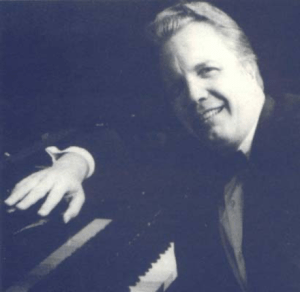
When Weiss Doubell took over the musical direction of the Johannesburg Bach Choir, he brought a small number of singers from Roodepoort and Dr Eberhard Künkel as his accompanist.
Künkel was head of the Opera School at the Pretoria Technikon and had trained in choir direction under Professor Kurt Thomas in Detmold, Germany. Künkel was a superb organist and continuo harpsichord player and was the mainstay of many of Weiss Doubell’s rehearsals. Weiss had many other musical commitments and was absent from some rehearsals, which were taken by Künkel.
For the first concert in 1983, the choir performed Beethoven’s Missa Solemnis in D major, Opus 123, conducted by Weiss Doubell in the Johannesburg City Hall. This was a very ambitious project as the work is long, difficult and very intense, but a masterpiece of choral composition. The soloists were Marita Napier, a South African born soprano, celebrated internationally for her Wagnerian roles, Stella Beder, Sjoerd Beute and Andreas Haller.
The concert attracted a full house. Audience and critics alike gave the musicians full credit for a fine performance. Weiss Doubell was deservedly congratulated and the Missa Solemnis was probably one of the highest musical achievements of the choir.
The November City Hall concert consisted of one work, Bach’s Christmas Oratorio, conducted by Dr Eberhard Künkel.
The choir’s archive contains a copy of Weiss Doubell’s resignation as musical director, following a disagreement with the choir’s management team about whether the Christmas Oratorio should be sung in English or in the original German text. Doubell was quite correct in his statement that the English translation did not do justice to the work, but there were practical considerations in that music scores were not available in German. Fortunately, choir members were not aware of the problems as rehearsals were mostly taken by the choirmaster, Dr Künkel, who was eventually persuaded to conduct the concert performance and take over the position of musical director.
1984
The Johannesburg Bach Choir had existed for twenty years and some manner of celebrating this was sought. Many proposals were considered, but one, perhaps more extravagant than the others, was adopted _ a 20th Anniversary Concert in the Johannesburg City Hall at which each of the choir’s five former conductors plus the present one, would be invited to conduct one work.
This idea caught the imagination of choir members and conductors alike and all made themselves available for the performance on the 18 June. Each conductor chose a suitable choral piece which was rehearsed by the choirmaster until a week before the concert, when the various “maestros” had the opportunity of putting the singers through their paces.
The patron saint of musicians, St Cecilia, must have smiled kindly on the organisers as the concert went off without a hitch, much to the delight of the participants.
The programme naturally consisted of six choral pieces:
| Work | Composer | Conductor |
| Motet No. 5, `Komm, Jesu, Komm’ | J.S. Bach | Eberhard Künkel |
| Cantata No. 50, `Nun is das Heil und die Kraft’ | J.S. Bach | Tony Fell |
| Magnificat | J.S. Bach | John Mitchell |
| `Ave Verum’ | Mozart | Tony Olds |
| Missa Brevis in D | Mozart | Robin Walton |
| `Te Deum’ | Haydn | Weiss Doubell |
The audience enjoyed the varied programme and the sight of six conductors on one platform, but the event was most appreciated by the 131 members of the Johannesburg Bach Choir.
A large and decorative concert programme costing R2-00 gave the names of singers and the musical accomplishments of the conductors in addition to details of the works performed. There was a suitable celebration after the concert.
The choir performed again in the Johannesburg City Hall in November 1984. The main work was the Stabat Mater by Rossini, with the celebrated Mimi Coertse as soprano soloist. The programme also included two of Haydn’s `Gesänge’ _ `Aus dem Danklied zu Gott’ and `Der Greis’ _ and the Symphony No. 40 by Mozart. Eberhard Künkel conducted the concert.
At the choir’s Annual General Meeting on 3 June 1985 at St Katharine’s School, Parktown, where the choir rehearsed each week, the financial reports for the 1984 year were presented by the treasurer, Jill Ackerley. These included the accounts for the two public performances and indicate some of the activities required to stage a concert.
| 20th Anniversary Concert | R | |
| Income | Ticket sales less commission | 10 002 |
| Programme Advertising | 275 | |
| Income Total | 11 349 | |
| Expenses | Orchestra & Conductor | 5 976 |
| Soloists | 1 125 | |
| Hire of Hall | 705 | |
| Front of House Staff | 138 | |
| Programmes & Posters | 1 229 | |
| Advertising | 450 | |
| Entertainment & PR | 990 | |
| Presentations & Prizes | 445 | |
| Hall Décor | 556 | |
| Gratuities | 146 | |
| Expenses Total | 11 760 | |
| Deficit | (-411) |
It will be seen that the largest expense was for the hire of the professional orchestral players and vocal soloists, usually for two rehearsals and a performance. The choirmaster was paid a concert fee of R400, but the other conductors gave their services free. They were partly compensated by a substantial lunch with committee members, in a private room at the Johannesburg Country Club, hosted by the chairman _ hence a rather large entertainment bill of R990. The cost of decorating the hall for this special occasion with flowers and banners was rather higher than usual. There were presentations to each of the conductors after the concert, consisting of engraved pewter tankards.
Those choir members who sold the most tickets were given cash prizes as a reward for their efforts. Direct selling of concert tickets by choir members was found to be the most effective way of getting an audience and this activity needed to be encouraged.
For example, tickets for the later Rossini Stabat Mater concert were sold as follows:
R %
Choir members 5694 61
Choir mailing list 1840 20
Computicket 1410 15
Box Office 387 __4
9331 100
This shows the importance of the choir member’s direct sales efforts, amounting to 61% of the value of the total ticket sales. Unfortunately, Rossini did not attract as large an audience as the previous 20th Anniversary Concert, and a loss of R2821 was made. This, together with the loss from the earlier concert of R411, made a total loss for the year of R3232.
The balance sheet for 1984, suitably abbreviated, showed:
R
Income: Membership fees & interest 3630
Expenditure: Purchase of music 3236
Hire of rehearsal hall 300
Choirmaster 2160
Other 689
Total Expenditure 6355
Deficit (2755)
Deficit from concerts (3232)
Total deficit for 1984 (5987)
At the start of 1984, the choir had funds of R13,828 and these were now reduced to R7841.
The AGM debated this situation. It is recorded that future concerts, some of which were to be in collaboration with the SABC orchestra, were expected to be profitable, so no action was taken other than to raise membership subscriptions from R20 to R24 a year and seek financial support from sponsors.
Other than the choir’s ability to fund its future public performances, a main concern was a drop in the number of singing members and the need to recruit suitable voices to balance each section as necessary.
While there were 131 names of members on the 20th Anniversary programme in June 1984, the singing strength of the choir had declined to 85 one year later. One of the reasons was the resuscitation of the SABC Choir under the direction of Richard Cock, which attracted some of the Bach Choir singers.
The choirmaster, Dr Künkel, was confirmed in his position for a further two years and congratulated on his efforts, and the deputy chairman, Lawrence Russell, was also thanked for his assistance when Ken and Inge Fuller were both incapacitated following a motor accident in July 1984.
The committee elected on 3 July 1985 comprised:
Chairman Ken Fuller
Choirmaster Dr Eberhard Künkel
Honorary Treasurer Jill Ackerley
Membership Secretary Inge Fuller
Honorary Secretary Fiona Crowe
Soprano Representatives Denise Tero
Anna Ramsay
Alto Representatives Judy Tilden
Robbie Welch
Tenor Representatives David Thorpe
Don Macey
Bass Representative David Kinghorn
131 Bach Choir members whose names appeared in the programme
of the 20th Anniversary Concert, 18 June 1984
Sopranos Altos Tenors
Jill Ackerley Pam Blundell Paul Bradley
Simone Bendig Virginia Bradley John Brauer
Rixa Beutl Renate Brauer Felix Ernst
Veronica Boniface Ila Burda Bill Henderson
Angelika Breuer Joan Coppin Peter Kerr
Almut Britz Fiona Crowe Johannes Leichter
Elma Bruggermann Jolanda de Beer Brian Loveday
Liffy Carverhill Margriet de Jong Donald Macey
Valerie Edminson Beatrice Delvare Herwig Martinek
Carla Ernst Pat Fantl Evan McGillivray
Jean Evans Mary Anne Forrester John Nicolson
Loraine Fleming Inge Fuller Peter Praschma
Leona Geyser Priscilla Fuller Michael Rees
Jean Greig Yvonne Garson Michael Romancia
Peta Glasser Jean Hart Lawrence Russell
Hilary Groves Rita Hefftner EliSabeth Schilling
Adrianna Harvey Heide Heitmann David Thorpe
Frances Henderson Ann Henderson Heinrich Wichern
Hiltrud Hoffmann Rosemary Henley Basses
Heike Hoffmeyer Laïla Hugow Bill Adams
Tessa Hund Barbara Hurst Graham Behr
Sheila Hunt Jenepher James Martin Behr
Jill Kirkland Silke Jaschinski Henry Blagden
Mariette Künkel Angela Lloyd Graham Bodman
Elizabeth Macey Kathy Mabin David Carverhill
Jeanne McKie-Thomson Caroline McDonald Robert Charlton
Sigrid Mertens Thelma Mills Pieter de Lange
Retha Moller Hettie Moller Leigh Evans
Cathy Morton Lisl Murray Reiner Fossati
Gwen Nicolson Jane Nicol Ken Fuller
Anna Ramsay Hanna Niedeheitmann Peter Hart
Elena Rees Barbara Rosenberg Bernard Hefftner
Jane Rees Joy Sadler Ted Homdrom
Beth Reynolds Hildegard Stielau Bill Ingram
Barbara Russell Nancy Sutherland David James
Gertrud Schmitt Judy Tilden David Kinghorn
Mary Sinclair Linda Toms Philip Lloyd
Denise Tero Sophie Turner Paul Loveday
Barbara Thorpe Tessa-Ann Viljoen Mike Martinson
Patricia Thorpe Roberta Welch Charles Pfenniger
Margaretha von Beck Inge Volbrandt David Sadler
Gesa von Roon Werner Schlebach
Pat Wark Paul Skoberla
Gabi Zahn John Slaughter
Barry Sweet
Hendrik van der Walt
Daniel Yett
 The Johannesburg Bach Choir