Stainer The Crucifixion No 5 The Mystery of the Divine Humiliation
1
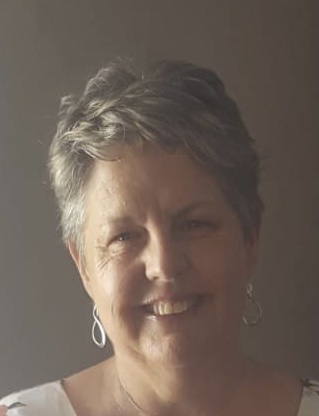
At the end of 2024, after 15 years leading the Johannesburg Bach Choir, Tim Roberts stepped down as Music Director and Ruth was appointed to follow him with effect from 1 December 2024. Ruth says that succeeding Tim is a great honour and a unique opportunity to continue to build the reputation and good name of the Choir.
Throughout her life, Ruth has jumped at musical opportunities in many environments. In 2012 for example, on one of four ocean cruises that she and husband have taken, she was selected by fellow passengers on a two-week voyage from Cape Town to Southampton to conduct this choir on the world cruise. The choir consisted of choristers from all over the world; from Australia to America, Europe and Britain. And, of course, Africa.
For many, the choir was the highlight of their cruise, something that inspired Ruth’s dream to form and lead a community choir of people who want to sing together but may not have the musical technique to do so in a “professional” choir in which one has to be able to read music. She brings a particular understanding of the challenges faced by singers and how to help them achieve a level of choir singing that can perform in public.
Another opportunity to work with a community arose when, just weeks before the Covid-19 lockdown, she founded the Johannesburg Queer Chorus with her son Thomas and Guy Trangos. Despite the travails of lockdown, the JQC, under her musical direction, grew apace and sang its first concert in February 2022. Further performances of this Chorus, dedicated to celebrating the city’s LGBTQIA+ community, followed, culminating in its participation, under Ruth’s direction, at the 2023 Various Voices Festival in Bologna, Italy. It was the only choir from Africa to do so. This was her final performance before she stepped down as its Music Director, having established a solid foundation on which the JQC continues to build.
But this was all to be in the future as a young Ruth completed her music degree. As mentioned in the previous article, she then started working for the Methodist Church of Southern Africa’s official newspaper, Dimension. Interviewing her for her first career job, that of administrative assistant was the Editor of the newspaper at the time, one Theo Coggin. He hired her and, over the years, taught her every aspect of producing a newspaper. At some point Ruth got tired of reporting to Theo, so she married him instead in December 1982. Theo has reported to her ever since. [An opinion of the writer that Ruth strenuously disputes.]
She did, however, become the Editor of Dimension in 1987 when Theo was appointed Deputy Director of the SA Institute of Race Relations. The first woman to do so, she held the editorship until the mid-1990s (together with the post of Information Officer of the MCSA) when she and Theo moved full time into their business, Quo Vadis Communications. Her time in the Church gave her vast experience as she worked with giants of the pre-liberation era such as Anglican Archbishop Desmond Tutu and Methodist Presiding Bishop Stanley Mogoba. As communications officer for the Church, she liaised with local and international media and was part of the MCSA’s national leadership.
Theo and Ruth’s relationship and marriage has always been full of graciousness and good humour. For instance, Ruth remembers being instructed by Theo in her early days of employment on the exact way in which his tea should be made. The tea pot and cup had to be warmed with boiling water. After pouring the warming water, the tea bag or leaves go into the tea pot and more boiling water is added. Only after being turned three times – anti-clockwise! – and resting for a few minutes, is the tea ready to be poured into the pre-heated cup. Needless to say, Theo today makes his own tea. [Not true, says Ruth.]
While raising a now grown-up family in which Ruth was stepmother to Andrew and Jenni and mom to the couple’s own son, Thomas, and building a strategic marketing and communications consultancy (a huge achievement in its own right), Ruth continued to sing, teach, play and conduct music. Joining the Johannesburg Bach Choir as an alto in 2013, she became the choir’s accompanist in 2018 when much loved Anglican priest and musician, Owen Franklin, retired from the role.
As a marketing professional Ruth also became involved in publicising the work of the Johannesburg Bach Choir. (She holds a Chartered Marketer qualification, as well as a Digital Marketing Diploma.) She was instrumental in preparations for the choir’s participation in the 2020 Leipzig Music Festival. When travel plans to Leipzig were sadly brought to nought by Covid, Ruth, in typical fashion, didn’t retreat into isolation. Instead, during lockdown she and Tim threw their energy into creating digital practice files allowing choir members to rehearse the pieces they were working on at home. Thanks to the pair, and, in spite of lockdown, the Johannesburg Bach Choir survived – even coming together, once strict lockdown was lifted, for practice every Monday evening via Zoom at Ruth’s home, with Tim singing and conducting the soundless voices via computer screen and Ruth accompanying on the piano!
This is pure Ruth. Giving 100% and then still finding some more.
More recently Ruth completely recrafted the website of the Johannesburg Bach Choir, including creating and uploading digital practice files. These allow the various sections’ voices to listen to their parts, a boon to members practicing at home. She also assisted Theo in creating The Bach Blog on the website, which you are now reading. Edited by Theo, the Bach Blog records and tells the history of the choir through the personal stories and recollections of members present and past.
In her spare time Ruth enjoys knitting, especially Aran jerseys. She also loves animals and at home is surrounded by a pack of boisterous canines, with musical names like Carmina, Papageno, Buxtehude and Wagner. Her favourite by far, however, is her silky grey cat, Mister Wu, named by Theo for a song made famous in the 1930s by George Formby. Ruth is also a keen water baby, celebrating the start of spring with what she calls the ‘Great Spring Swim’ – a dip in the large and unheated swimming pool of the Coggin home. No matter how icy, this occasion happens religiously on 1 September every year.
Despite her many interests, pursuits and activities Ruth loves the pipe organ the most. Ever her first love, and as her many friends and colleagues attest, she is never happier than seated at an organ expanding her repertoire. Her feet firmly on the pedals, hands on the manuals, she revels in “pulling out all the stops” of an instrument played most often to reflect God’s grandeur and magnificence.
Now it is the Johannesburg Bach Choir that is benefitting from her immense love of music, choral singing, and working with choirs. An inspired teacher and leader in her work and life.
Nos 13-16 “Aber am ersten Tage”
Music score:
German pronunciation:
No 14: Wo, wo, wo willst du
No 15b: Herr, bin ichs
No 16: Ich bins, ich sollte bussen
Rehearsal aids
2025 Season 1 – The Crucifixion by John Stainer
Music scores all parts
No 3 – Processional to Calvary (“Fling wide the gates” starts on the third page)
No 5 – The Mystery of the Divine Humiliation
No 13 – The Mystery of Intercession
No 15 – The Adoration of the Crucified
No 18 – The appeal of the crucified
Rehearsal aids
Link to rehearsal aid: Sopranos (you need to be online to listen to this)
Link to rehearsal aid: Altos (you need to be online to listen to this)
Note to tenors: Tenor 1 and Tenor 2 are the same, except for nos 14, 16 and 19 where the tenors split into two parts.
Link to rehearsal aid: Tenor 1 (you need to be online to listen to this)
Link to rehearsal aid: Tenor 2 (you need to be online to listen to this)
Note to basses: Bass 1 and Bass 2 are the same, except for nos 14, 16 and 19 where the basses split into two parts.
Link to rehearsal aid: Bass 1 (you need to be online to listen to this)
Link to rehearsal aid: Bass 2 (you need to be online to listen to this)
In the first of his articles on Ruth Coggin, the new music director of the Johannesburg Bach Choir, Stuart Meyer traces her musical journey from her teenage years of learning to master the grandeur of a pipe organ to participating in some of the seminal historic events in South Africa
“Music gives a soul to the universe, wings to the mind, flight to the imagination and life to everything” (Plato).
For Ruth Coggin, recently appointed music director of the Johannesburg Bach Choir, Plato’s quote perfectly sums up how music brings purpose and joy to her life.
I was blessed to meet Ruth when I auditioned for the Johannesburg Bach Choir at the end of 2023. Tim Roberts, music director at that time, had asked me to warble out some sounds approximating what Ruth was playing on the piano. My performance was dire. Tim was all grace and diplomacy. Ruth’s face, however, told the truth in all its devastating clarity. And this wasn’t a good cop / bad cop regime. Despite being truly awful, Tim’s kindness prevailed and I was accepted in the choir.
Only later did I discover the extent of Ruth’s own kindness, brilliance and immense generosity.
Week after week, Ruth collared me during the Monday evening coffee break. Standing at the piano she patiently helped me hear and alter my tone between octaves and even climb and descend scales. She also made sure I practiced on the piano at home, testing my range weekly for improvement. This attention and effort, unfailingly dedicated to a single unimpressive new member of a long-established choir of over 60 people, is illustrative of the skill, kindness, commitment and attention to detail that Ruth brings to the Johannesburg Bach Choir.
Subsequently, Ruth and her husband Theo have made their home and expertise available to the Johannesburg Bach Choir’s basses (and other sections) for extra lessons on Saturdays and Sundays throughout the year. It’s a real treat to gather in Ruth’s music room, often surrounded by vases of magnificent roses for which she and Theo regularly receive prizes at horticultural shows.
Seated at either her piano or organ Ruth commands the room. For two or three hours, she will tirelessly play, listen, correct, cajole and explain. And she doesn’t miss a trick. No matter how many punters duff it around the piano, no one can hide. Ruth has the sharpest ears. A wizard of attention, focus and patience. A true and inspired teacher.
Hearing the pipe organ in a church at the age of 16, Ruth Sampson fell head over heels in love with this majestic instrument.
It was inevitable. With both parents playing musical instruments and the young Ruth learning the piano, she grew up in an intensely musical home. She remembers drifting off to sleep in bed to the sound of her parents listening to live music broadcasts from Johannesburg City Hall. Dropping off to the sound of the orchestra tuning up, Ruth remembers waking later to the waves of applause as the symphony ended. She always thought the clapping also sounded like music.
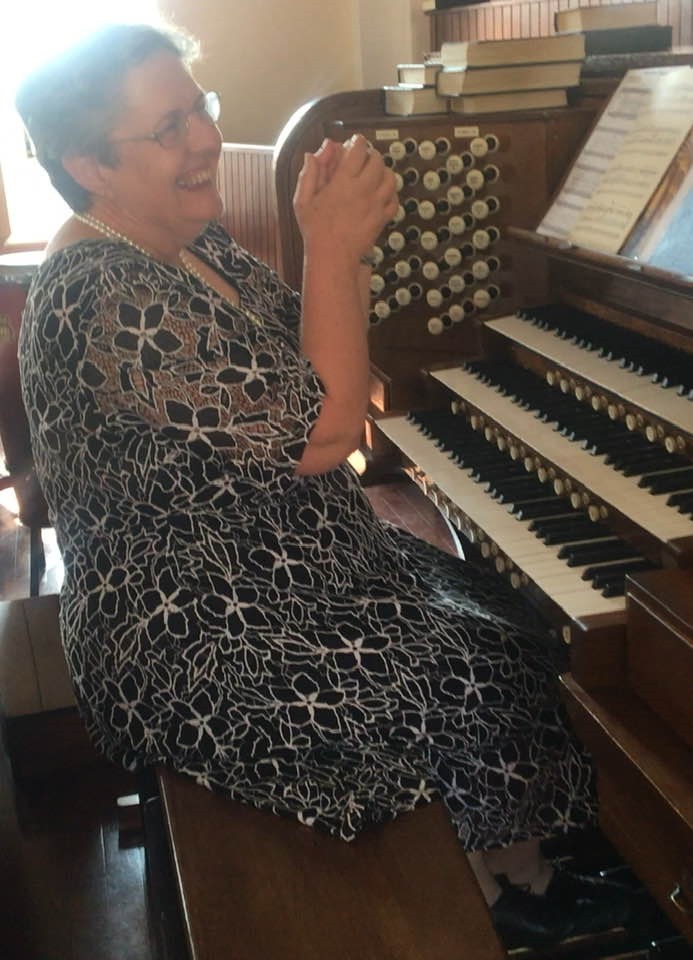
Yet it was the magnificent cadences of organ pipes redolent of heaven, however, that truly galvanised her 16 year old mind. Thoroughly inspired by the celestial sounds of the organ, Ruth started taking lessons at St John’s College with the late James Gordon, music master at the College and subsequently at St Martin’s-in-the-Veld Anglican Church. James was also a magnificent tenor and sang in at least one of the Johannesburg Bach Choir’s concerts.
In those days, the pipe organ was not an instrument frequently played by girls. Explaining that every organ has its own distinctive ‘soul’, Ruth says that the St John’s College organ remains her favourite to this day. It is the one which she feels most comfortable playing, as though she is ‘at home’. Not surprisingly it was a highlight for her to perform a Trumpet Fanfare by Purcell on St John’s organ for the JBC’s 60th anniversary concert in November 2024.
After practicing the organ every afternoon through high school, Ruth went on to a BMus degree at Wits, majoring in pipe organ, followed by an honours degree with a dissertation on the Johannesburg City Hall organ. Ruth graduated as one of only two women in her age group to study the organ professionally at Wits.
As a female pipe organist and all-rounder Ruth went on to blaze her own musical trail, defined and inspired by her characteristic enthusiasm, aplomb and plain old hard work and perseverance.
In her student years Ruth, like many others, became deeply aware of the socio-political inequity in South Africa. On graduating, she became convinced that she could contribute to breaking down the barriers between the races in South Africa through communication, and in particular through the one institution that, at the time, facilitated such communication – the Church. As a result, she applied for a job at Dimension, the official national newspaper of the Methodist Church of Southern Africa. Appointed by the then Editor, Theo Coggin, Ruth’s career in communication began.
Her love for the organ notwithstanding, Ruth was still completing her studies at Wits when she formed a choir at what was then the student church of the Methodist Church, the Civic Centre Church. Her love of the organ and choral singing never wavered but it was clear when she left university that South Africa was not a country where playing the organ and directing choirs could sustain a living. That said, in addition to her day job on the newspaper Ruth went on to play the organ and form and lead choirs for both the Kensington Methodist and Johannesburg Central Methodist Churches as well as the St Francis Anglican Church. She regularly fills in at other churches when organists are away and frequently plays at weddings and funerals. Indeed, she is considered the ‘official’ organist for a wide variety of events for her extended family whenever an organist is required!
In one of her most memorable experiences Ruth was honoured to be appointed organist to accompany the Imilonji nKantu Choir that sang at the inauguration of South Africa’s first democratic President, Nelson Mandela, at the Union Buildings in Pretoria in 1994. She also played at the National Service of Thanksgiving for a democratic South Africa on the Sunday before Mandela’s inauguration at the FNB Stadium in Soweto.
Ruth is currently the accompanist for the Lewandowski Chorale, which sings Jewish liturgical music in Hebrew, a relatively new musical challenge for her that she greatly enjoys.
 The Johannesburg Bach Choir