


No 3 – Processional to Calvary
Allez! The harmonics of sword and song at play
By Rosemary Padi
Members of the Johannesburg Bach Choir (JBC) come from all walks of life. That much is probably obvious. Not so obvious, however, are the fascinating array of interests (plus skills, experience, hobbies and sporting exploits) that many of our members enjoy.
Marguerite Langton, a retired diagnostic radiologist who has been a member of the choir for many years, is one such person. At present she is also a member of the St George’s Anglican Church choir in Parktown, Johannesburg.
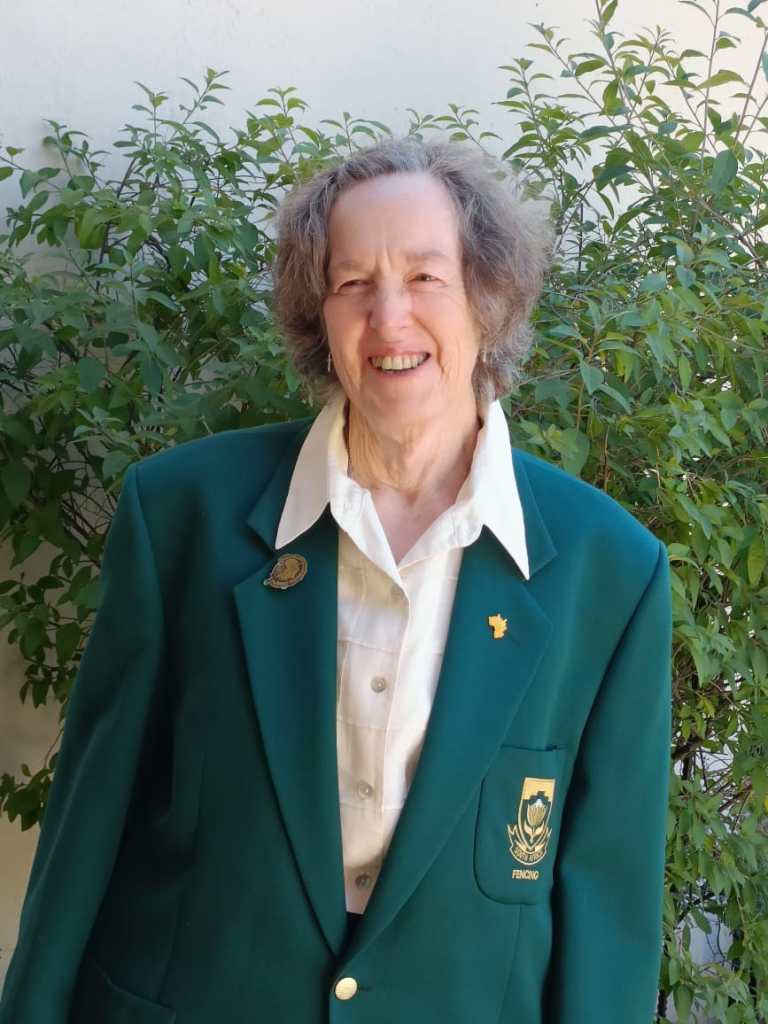
As a young woman, Marguerite sang soprano with the St Mary the Virgin’s Cathedral Choir in Johannesburg before moving overseas. On her return to South Africa she met the woman who was to become her best friend, coincidentally also called Marguerite, and introduce her to the Johannesburg Bach Choir in 2006. They shared a love of classical music, Latin and ballet among many other interests.
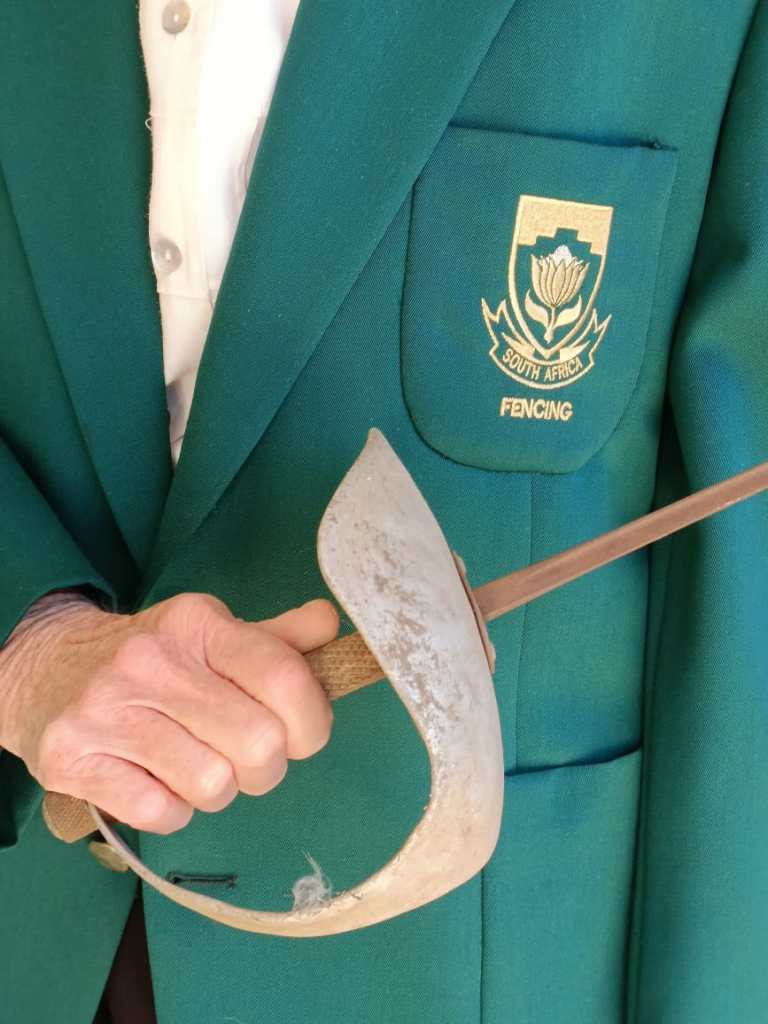
There was one other notable interest these two women shared: fencing. Competitive fencing no less!
Marguerite has a distinguished record as a fencer having earned national colours on several occasions. She is proud justifiably proud of this and often wears her South African colours when she comes to practice, the green and gold making a rich background to the alto section of the choir.
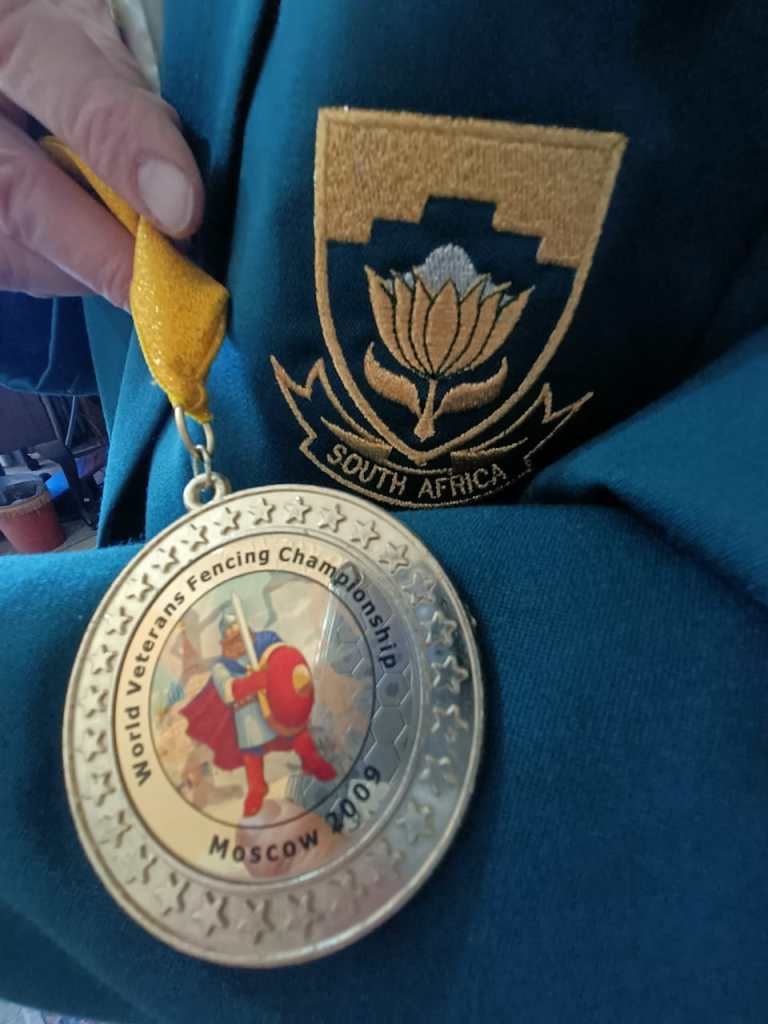
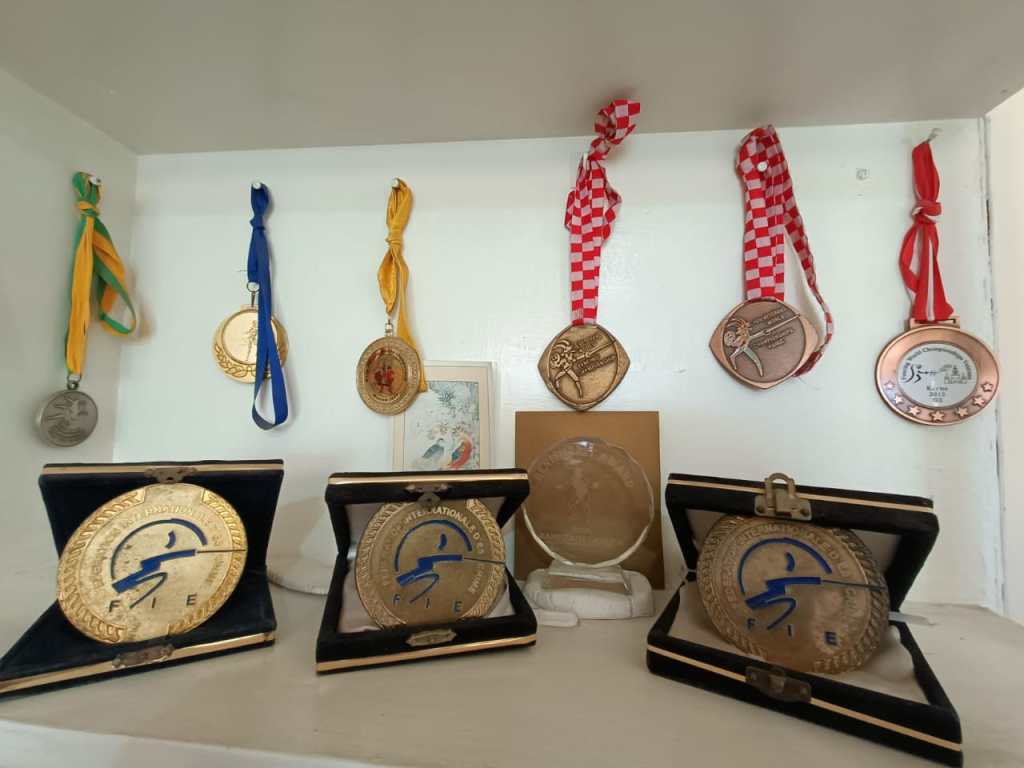
Having represented her country at two World Championships, once in sabre and the second time in foil, Marguerite won three gold medals, one silver and three bronze from the Veterans’ Fencing World Championships between 2006 and 2012, held in Scotland, Austria, France, Croatia and Russia respectively.
Her age and passion for singing will not stop Marguerite from taking part in a fencing competition, if the timing is right. She will put on her fencing attire, her choir uniform on top, go sing at the mass at St George’s and once done, take off the choir uniform and drive to the other side of the city to take part in a fencing competition.
Quietly spoken, Marguerite’s love for the choir and its harmonious sound is obvious. At the recent display of memorabilia to mark the choir’s celebration of the 60th anniversary of its first-ever performance, she was one of those bearing some fascinating material. One of these was the programme of the concert in 2006 when the JBC choir sang the Mozart Requiem Mass with Weiss Doubell’s Pro Musica Opera Chorus at the JBC’s 25th anniversary concert. The second concert of note was in 2007 when the choir sang Haydn’s Creation in St
Stithian’s School Chapel, under the directorship of Dario Broccardo.The historical roots of fencing as a contemporary sport are to be found in ancient combat practices, requiring individuals to defend themselves in serious combat situations. It has evolved into a sport with a dedicated following that requires the utmost skill, speed and quick eye. Not a sport for the faint-hearted.
Not surprising therefore that Marguerite enjoys the sport for it is clear that not much puts fear into her feisty heart. This is amply demonstrated by her allergy to bees. In spite of the allergy she will never hesitate to provide a grain of sugar with a drop of water to revive a battling bee when she sees one.
From “permission-of-husband-required” to JBC chair
By Helen Grange
It was the sublime, evocative voice of the late, great Kathleen Ferrier that struck awe into the young Kathy Whiteley. All she wanted was to sing like her.
“I asked my mother, did I sing like Kathleen Ferrier, the mezzo-soprano? Her reply was, ‘you are more a messy soprano’,” smiles Kathy.
It’s no accident that Ferrier was well known to the young Kathy; she grew up in England where the famous singer’s voice was often heard on the radio. At the age of eight, Kathy joined the local church choir and sang in it for six years. “It was very small – two young sopranos and two older ladies. We sang Evensong every Sunday.”
In 1964, Kathy and her first husband emigrated to South Africa. It was a long journey, especially for a woman six months pregnant. “We flew for 33 hours, starting at Southend (Essex, UK) to Basel (Switzerland) to Tripoli (Libya) to Kano (Nigeria) to Brazzaville (Congo) and finally, to Jan Smuts (Johannesburg).”
Kathy raised her three children before joining another choir, this time in Germiston where the Whiteleys had settled. “My two eldest sang in the junior choir at Germiston Presbyterian church and I was asked to lead the youngsters. This led to me singing in the senior choir in the evening.”
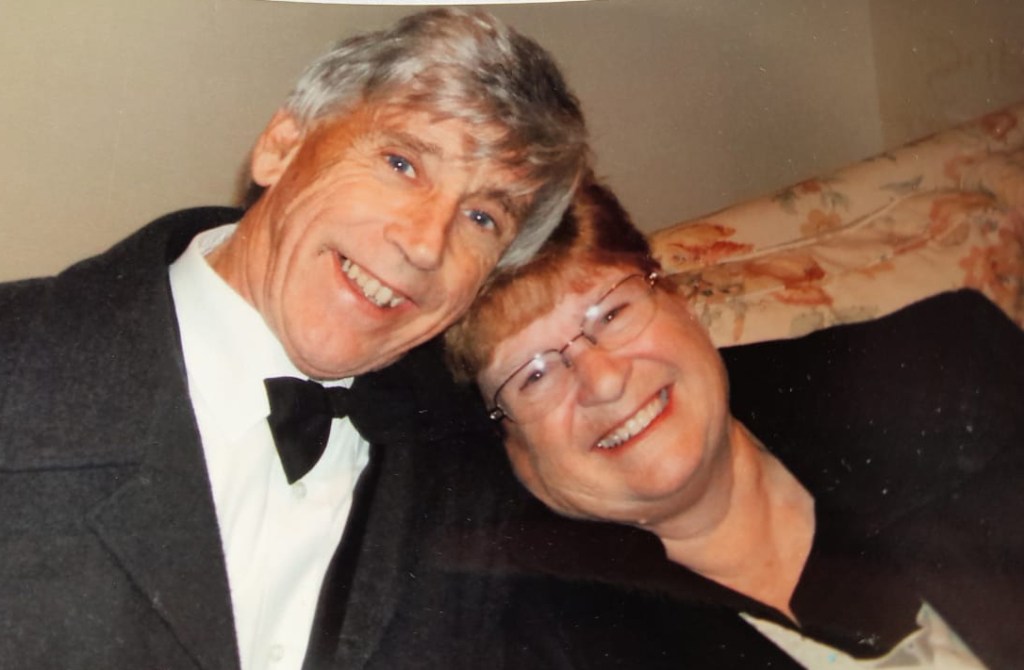
She met Stephen, her husband, at the Presbyterian church, and after they married, they left to join the Anglican church. “We joined the Royal School of Church Music and went to their annual choir schools. This helped me with my sightreading, and I passed Trinity College Grade 4 singing.”
She and Stephen joined the Johannesburg Bach Choir together in 1983. Kathy was a first soprano, later to become JBC chairperson, and Stephen was a tenor, later becoming a tenor leader. Back then, married women were not yet their own agents in conservative South Africa’s polite society.
“We were auditioned by Dr Eberhardt Kűnkel, who refused to tell me if I had passed until he had auditioned my husband. He told me he would not accept one member of a married couple without the other, because it was a social event. I couldn’t sightread at that stage, but took up piano playing at the age of 40 to learn how to do so,” says Kathy.
At the time, the choir was performing large-scale choral works in the Johannesburg City Hall by Bach, Mozart and Beethoven, accompanied by a full orchestra. Membership was around 100 singers. Kathy was appointed to the chair in 2005 and held the seat until 2008.
One of her more unpleasant duties in this capacity was to give notice to the then choir director, Walter Butt, who had decided that instead of working with the JBC committee to boost membership, Wits music students should supplement the numbers. This didn’t go down well with the older members and it was decided that Butt should leave.
“It fell to me to hand over the letter, but Stephen volunteered to do it. Mr Butt stormed out of the choir rehearsal and he had to be called back to receive the letter. One woman came back into the venue and cried, ‘Kathy, what have you done?’ I answered that the committee decided Butt had to go to save the choir.
“Our old friend and former music director, Colin Yorke, agreed to take on the choir and its remnants met at St Columbia’s church in Parktown. There were 25 members present and Colin was very gentle with us. Gradually old members returned and new members joined,” she recalls.
Kathy and Stephen left the choir in 2008 when they retired to Sabie, Mpumalanga. They miss the choir terribly.
Six conductors and 60 years: Memories abound for Diane Coutts
By Marlene Ross
The Johannesburg Bach Choir has been associated with some of South Africa’s most talented musicians during the past 60 years. Diane Coutts, who has performed with the Johannesburg Bach Choir as organist, pianist and harpsichordist, twice received the SABC Artes award for best piano recordings and has also received lifetime achievement awards from the South African Music Rights Organisation (SAMRO) and the South African Society of Music Teachers (SASMT). Diane’s association with the Johannesburg Bach Choir goes back to the 1990s. She still accompanies the choir for rehearsals on an ad hoc basis.
Born in Durban, Diane studied piano, organ and flute. Her organ tutor was Errol Slater, who was the organist at St Paul’s Church in central Durban. At one of her piano performances in Durban she was noticed by Ivey Dickson, a professor at the London Royal Academy of Music and the director of the National Youth Orchestra of Great Britain. She invited Diane to study in London from 1965 to 1966.
On returning to South Africa, she was appointed as the SABC accompanist for Natal in 1970. In 1979 she was transferred to Johannesburg as the official SABC accompanist and as member of the National Symphony Orchestra of the SABC. Diane prefers accompaniment to solo work, because it provides her with the opportunity to share her love of music with other musicians. She explains that in duo work in particular, one is able to share ideas on interpretation with fellow musicians. She has accompanied many contestants at the Unisa International Strings Competitions as well as the Unisa International Voice Competitions, including the winner of the Unisa International Strings Competition in 2010.
Referring to her many piano recordings, Diane explains that she prefers “leaving a recording as a legacy as opposed to playing in live concerts, which is just a fleeting moment in time”. As an introvert, she feels it also better suits her personality.
Apart from her work at the SABC, she also examined for Unisa and was juror for many music competitions. Diane has many qualifications in teaching, accompaniment and performance for organ, piano and flute. Her students excel in their examinations, many of them winning Unisa awards. She is still teaching and has adapted to the post-Covid online teaching and examination methods with aplomb.
In 2019, after serving the Catholic Church as organist for 60 years, she received an award from Pope Francis. Diane is still the organist at St Bonifatius German Speaking Catholic Church in Randburg.
Diane has performed with the Johannesburg Bach Choir as organist, pianist and harpsichordist with six resident conductors – Bruno Peyer, Douglas Reid, Roland Solomon, Colin Yorke, Dario Broccardo and Tim Roberts. Highlights of her performances with the Choir include playing the harpsichord solo part in the Bach Brandenburg Concerto No 5 on a locally built harpsichord for its inaugural performance, as well as the challenge of playing the Mozart Requiem on the organ, in place of a full orchestra.
Diane remains an inspiration to her students and fellow musicians and the Johannesburg Bach Choir is very proud that she is part of the choir’s journey.
The Johannesburg Bach Choir is delighted to receive a letter of congratulations on its 60th anniversary celebrations from the Leipzig Bachfest and the Bach Archive Leipzig. The Leipzig Bachfest is the world’s most significant Bach festival, attracting choirs from throughout the globe. We are honoured to be congratulated in this way. The letter is below.

 The Johannesburg Bach Choir