Tony and Jemima Cantrell
By Alistair Findlay

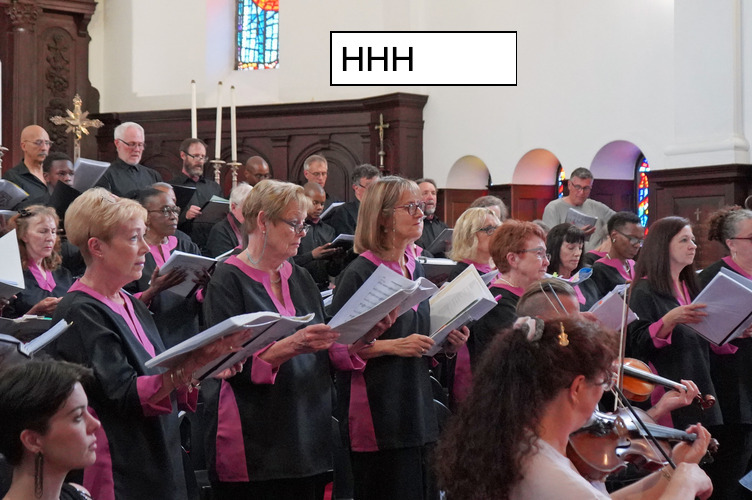
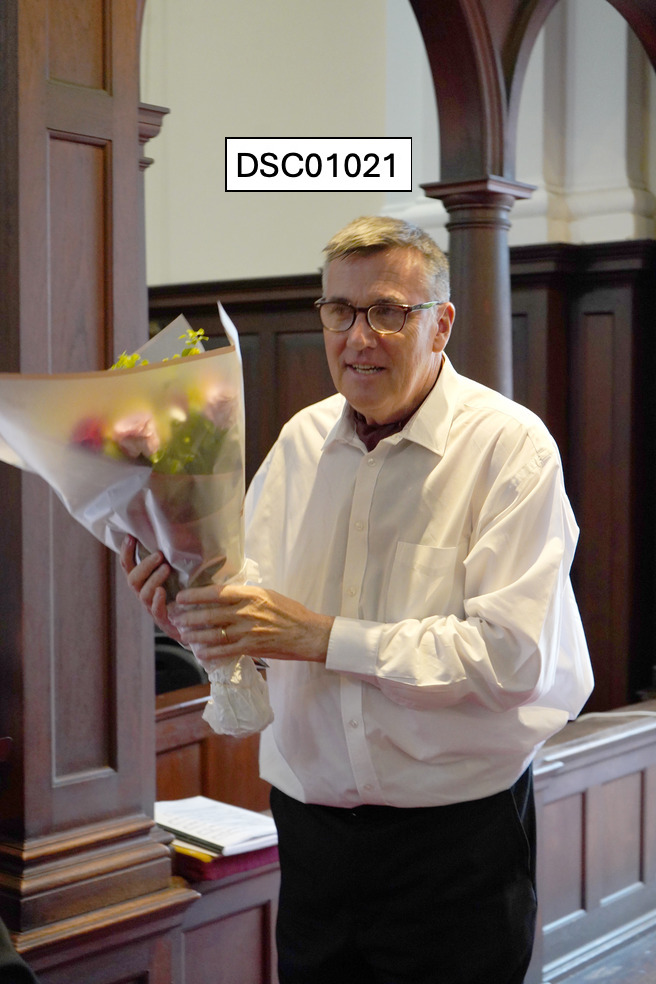
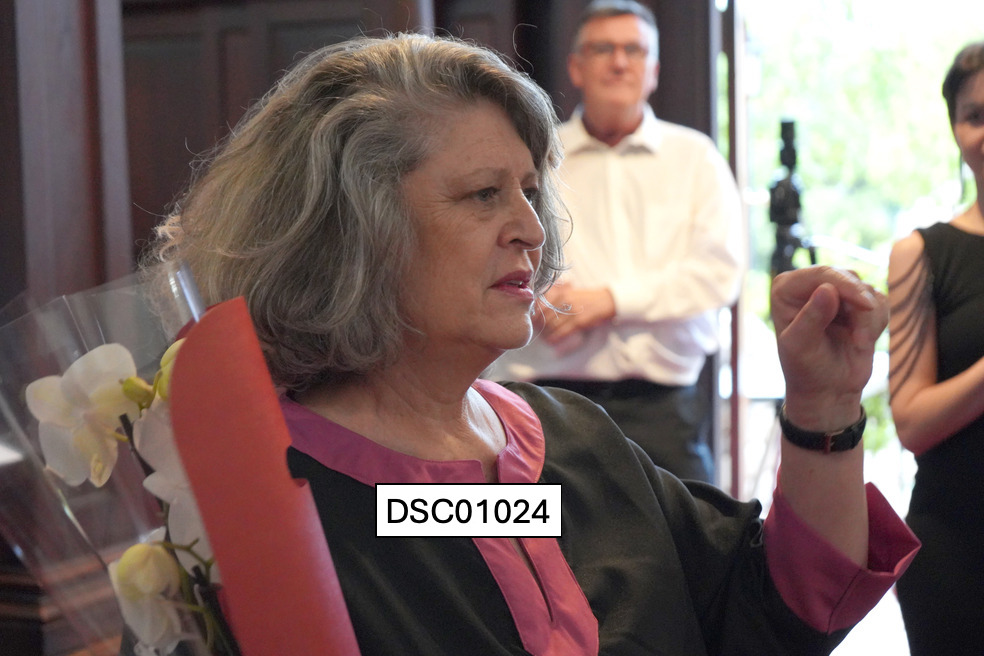
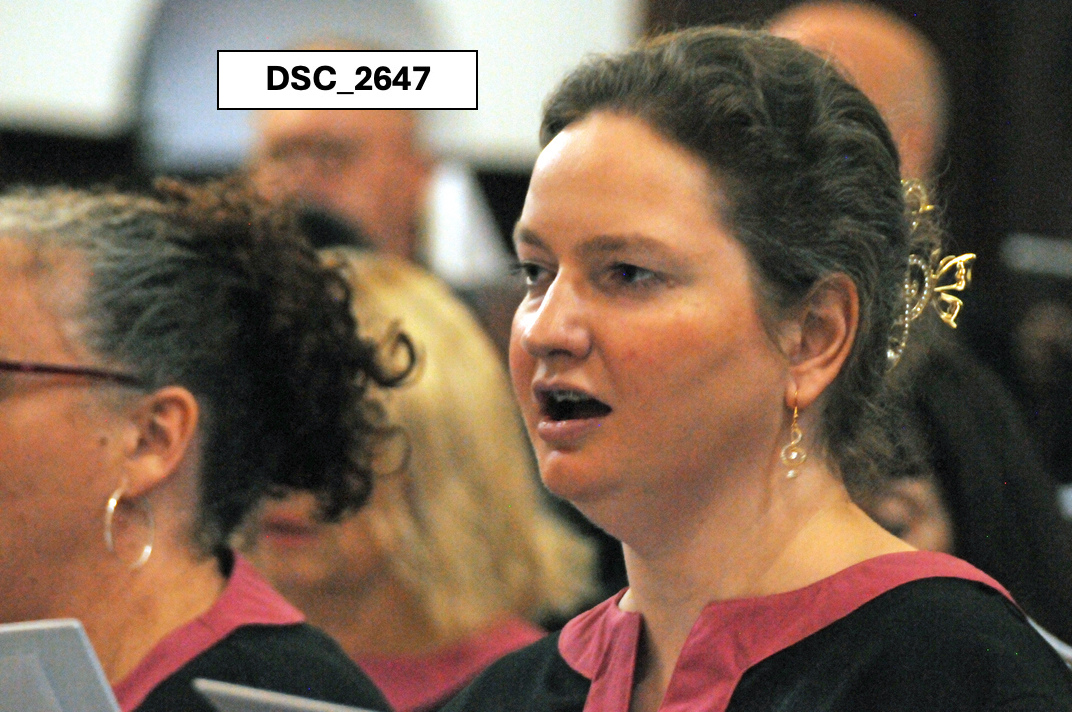
Tony and Jemima Cantrell are long-standing members in the Johannesburg Bach Choir, having joined in 2005, when it was still under the directorship of Mario Broccardo. They both come from musical and artistic families.

Jemima’s grandfather’s violin narrowly escaped being incinerated in the burning of their farm during the Anglo Boer war. Her parents sang in the church choir and many in the family were piano teachers. As a schoolgirl she came first in many an Eisteddfod with her singing. She also took piano lessons. Piano exams were through UNISA and examiners had to travel from Bloemfontein to Postmasburg to do the assessments at their family home. Work-wise she established herself in the field of medical research from where she would often nip off during her lunch hour for singing lessons. In 1967 she took two years off to study at the Hochschule für Musik in Munich under Professor Dr Karlheinz Blaschke. She also sang in the Munich Bach Choir under Professor Karl Richter. On her return she joined the SABC choir and had a chorus part in the PACT production of The Merry Widow.

Jemima and Tony with the delightful portable pump organ in their beautiful home in Emmerentia. The Cantrells have been members of the Johannesburg Bach Choir for nearly a fifth of a century!

Tony’s grandmother played the harmonium, a portable pump organ much in use in those days. She accompanied her husband on missionary work in the then South West Africa (now Namibia). They travelled by railway caboose to small towns where she would attract residents with the sound of her playing, forming congregations for their mobile ministry. Tony sang in both the Kearsney College and the University of Natal’s Maritzburg campus choirs. On meeting Jemima, they became members of their church choir. Tony is a trained biochemist and was Professor in Toxicology at the University of the Witwatersrand. It was his head of department, the late Professor Tony Davies, who suggested the couple join him in the Bach Choir.

According to Jemima, the Bach Choir today is in better shape than ever, with Tim Roberts and Ruth Coggin at the helm. “I have a passion for singing and singing together with other people lifts the soul,” she says.

Tony and Jemima’s other pastimes include painting, birding and beetle collecting. Jemima showed me an exquisite water colour of a pineapple she had done. “Beautiful pawpaw,” quipped Tony. But he couldn’t show me his beetle collection. It had been eaten by very small beetles.

  • Alistair Findlay is leader of the bass section of the Johannesburg Bach Choir

Leona Malan

Monday, Monday, so good to me”

By Theo Coggin

The Mamas and the Papas of the 1960s would have little in common – one would think – with JS Bach, the doyen of Baroque composers, let alone with the Johannesburg choir that is named in honour of one of the most revered composers of all time. But listening to the animated manner in which the current chairperson of the Johannesburg Bach Choir (JBC) speaks of how much she looks forward to every Monday, the 1960s hit, “Monday, Monday”, by the Mamas and the Papas immediately came to mind.

Leona, a lawyer by profession, says with great conviction about her enjoyment of music and the JBC, “This choir is my therapy. I know that everyone has to ‘turn up for life’ on every occasion we are challenged. But knowing that on Mondays I will sing in the Bach Choir helps me cope even better.”

With her blue eyes flashing with conviction, Leona says that her Monday afternoons are spent looking forward to choir practice. “I prepare fully. I go to choir at rest with the fact that I am experiencing a dimension which, before I joined the choir, my life never had. It’s like the final piece of a puzzle fitting in.”

Leona joined the choir about two years before Covid struck. During Covid, she faithfully attended online practices each Monday, even though it was an exceptionally difficult medium for the choir to work in. Nonetheless, with others, she persevered to hone her musical skills. She laments the fact that the choir had to forego an invitation to attend the Leipzig Bach Festival in Germany as a result of the pandemic. Yet she believes that participating in those online practices assisted in building the team effort which is the prerequisite of any good choir.  And now, says the soprano who became chairperson shortly after Covid, the Bach Choir is a good choir, with its own unique culture, commitment, community and growing passion.

Independence is one of Leona’s strengths. But her understanding and appreciation of the community and belonging that the choir provides to each of its members is exemplified by the harmonious cooperation she seeks in a group of people, many of whom also exhibit their own strong characteristics. And the way in which she works with the choir’s music director and assistant music director underlines this.

Speaking about her life, she adds: “I’ve tried to live in a unique way. I’ve never wanted to wait for someone else to make my life. So I’ve often swum against the tide, which has brought many challenges. But I cherish my independence, and joining the choir gave me the space to be myself and yet, at the same time, be part of a harmonised community through music and song.”

As Leona spoke about her love of music and commitment to the JBC, an echo of the last verse of “Monday, Monday” reverberated in my mind.

Every other day, every other day, every other day of the week is fine, yeah
But whenever Monday comes, but whenever Monday comes, you can find me singin’ all of the time.

The mamas and papas

(With apologies to lyric writer Papa John Phillips, leader of the Mamas and Papas, for the change in the last line.)

Theo Coggin is a member of the bass section of the Johannesburg Bach Choir and is Chairperson of the 60th anniversary marketing sub-committee.

Tim Roberts

Half a millennium of music is the soundtrack foundation
of the music director of the Johannesburg Bach Choir

By Jemima Cantrell

The ongoing continuum of musical expression is central to the entire personal and professional demeanor of Tim Roberts, the affable musical director of the Bach choir.

Tim speaks readily of his experience of music and the enjoyment it gives him. While primary school singing every Friday morning may not be everyone’s cup of tea, Tim recalls his genuine enjoyment in his youth of participating in such singing, of doing so with great happiness, and of being even more chuffed when he discovered he was “quite good at it”. He went on to sing in the local cathedral choir which he says “was a significant step up and truly hooked me on music by the time I was about 14 years old”.

As a youngster his choice of music suggested that he would become the musician we know now – a person constantly seeking out different genres and new music. The eclectic soundtrack that provided the backing to his teenage years ranged from 16th composer Palestrina to 20th century rock band, The Clash.

“These experiences ingrained in me a love for both vocal and instrumental music, as well as becoming involved in groups making music.” That is well illustrated in his unique skill in leading the Bach Choir.

As principal oboist for the Johannesburg Symphony Orchestra, he performs and is part of something larger than himself. He continues his contribution to music with the enormous energy and vision that goes into being the doyen of the St Francis Music Festival, presented in autumn each year at St Francis of Assisi in Parkview, Johannesburg. Many a musician has made their debut at that festival and the Bach Choir performs there each year.

Balancing all these roles comes naturally to him because they all revolve around his core passion for music and people.

Tim’s great affinity for people is rooted in his pride in the achievements of each person he comes across. This is well expressed in his family – his wife Fiona, and their three children, Tom, Isabelle and Katy. He speaks of them with great warmth and they are often to be seen at his concerts.

Tim’s vision, however, extends far and wide: “Groups that form our daily lives and many others are struggling. Families, colleagues at work, churchgoers, business people and other professionals. For people such as these, groups like choirs, book clubs, bridge groups and the like are really important. Belonging to such groups provides people with a sense of community, belonging and shared purpose.”

“For people [who are struggling], groups like choirs …. provides people with a sense of community, belonging and shared purpose.”tim roberts, musical director

Thus Tim is convinced that music, choirs, orchestras, theatres and the arts will become even more important in the next decade. Celebrating the 60th anniversary of the Johannesburg Bach Choir in 2024 provides a unique opportunity to set the tone for the future.

Then he adds, perhaps with a hint of nostalgia: “When one is younger one feels invincible. But as one gets older, one starts to be aware of the fleeting nature of life, and the deep emotional resonance that music and singing can provide. For me, music has become a way to connect with the past and imagine the lives of composers and performers as they themselves aged.”

Everything about this kind, modest and approachable man and his love of music and commitment to the communities of people of which we are part speaks of his love of building a legacy for today and the future that is yet to be.

  • Jemina Cantrell is a long-standing member of the Johannesburg Bach Choir. She studied music in Germany and she generously shares her skills with other musicians.

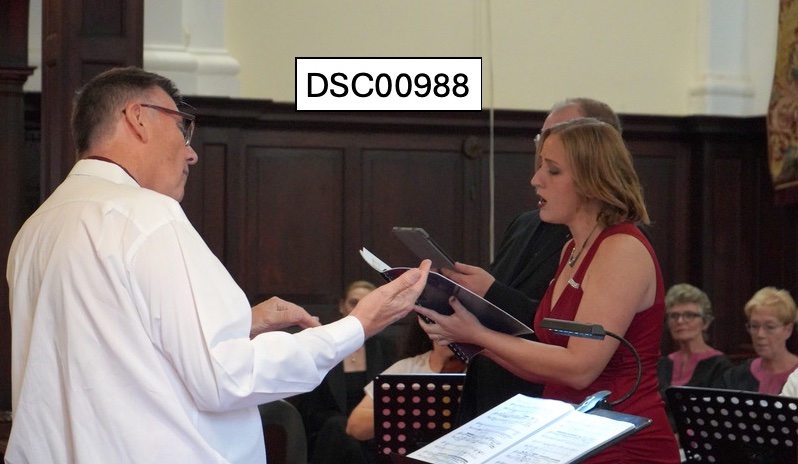
Music Director Tim Roberts (centre) with chairperson Leona Malan (right) and accompanist Ruth Coggin (left) [Photo: Theo Coggin]