Bach, singing and the pipe organ: a love story on its own

In the first of his articles on Ruth Coggin, the new music director of the Johannesburg Bach Choir, Stuart Meyer traces her musical journey from her teenage years of learning to master the grandeur of a pipe organ to participating in some of the seminal historic events in South Africa

“Music gives a soul to the universe, wings to the mind, flight to the imagination and life to everything” (Plato).

For Ruth Coggin, recently appointed music director of the Johannesburg Bach Choir, Plato’s quote perfectly sums up how music brings purpose and joy to her life.

I was blessed to meet Ruth when I auditioned for the Johannesburg Bach Choir at the end of 2023. Tim Roberts, music director at that time, had asked me to warble out some sounds approximating what Ruth was playing on the piano. My performance was dire. Tim was all grace and diplomacy. Ruth’s face, however, told the truth in all its devastating clarity. And this wasn’t a good cop / bad cop regime. Despite being truly awful, Tim’s kindness prevailed and I was accepted in the choir.

Only later did I discover the extent of Ruth’s own kindness, brilliance and immense generosity.

Week after week, Ruth collared me during the Monday evening coffee break. Standing at the piano she patiently helped me hear and alter my tone between octaves and even climb and descend scales. She also made sure I practiced on the piano at home, testing my range weekly for improvement. This attention and effort, unfailingly dedicated to a single unimpressive new member of a long-established choir of over 60 people, is illustrative of the skill, kindness, commitment and attention to detail that Ruth brings to the Johannesburg Bach Choir.

Subsequently, Ruth and her husband Theo have made their home and expertise available to the Johannesburg Bach Choir’s basses (and other sections) for extra lessons on Saturdays and Sundays throughout the year. It’s a real treat to gather in Ruth’s music room, often surrounded by vases of magnificent roses for which she and Theo regularly receive prizes at horticultural shows.

Seated at either her piano or organ Ruth commands the room. For two or three hours, she will tirelessly play, listen, correct, cajole and explain. And she doesn’t miss a trick. No matter how many punters duff it around the piano, no one can hide. Ruth has the sharpest ears. A wizard of attention, focus and patience. A true and inspired teacher.  

Hearing the pipe organ in a church at the age of 16, Ruth Sampson fell head over heels in love with this majestic instrument.

It was inevitable. With both parents playing musical instruments and the young Ruth learning the piano, she grew up in an intensely musical home. She remembers drifting off to sleep in bed to the sound of her parents listening to live music broadcasts from Johannesburg City Hall. Dropping off to the sound of the orchestra tuning up, Ruth remembers waking later to the waves of applause as the symphony ended. She always thought the clapping also sounded like music.
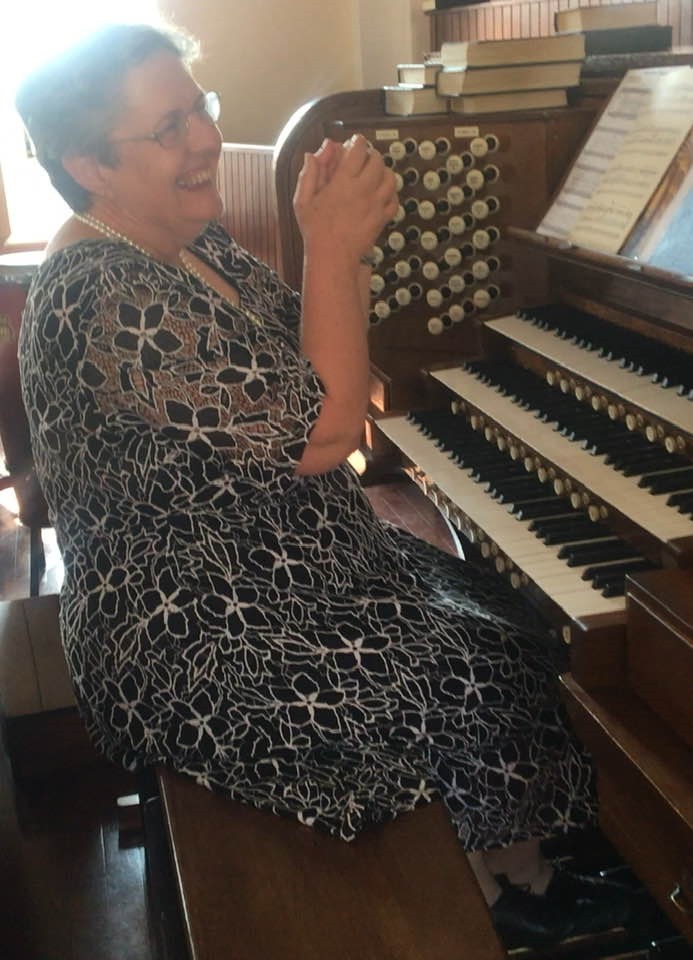
Ruth at the St John’s organ – the instrument with which she feels most ‘at home’.

Yet it was the magnificent cadences of organ pipes redolent of heaven, however, that truly galvanised her 16 year old mind. Thoroughly inspired by the celestial sounds of the organ, Ruth started taking lessons at St John’s College with the late James Gordon, music master at the College and subsequently at St Martin’s-in-the-Veld Anglican Church. James was also a magnificent tenor and sang in at least one of the Johannesburg Bach Choir’s concerts.

In those days, the pipe organ was not an instrument frequently played by girls. Explaining that every organ has its own distinctive ‘soul’, Ruth says that the St John’s College organ remains her favourite to this day.  It is the one which she feels most comfortable playing, as though she is ‘at home’. Not surprisingly it was a highlight for her to perform a Trumpet Fanfare by Purcell on St John’s organ for the JBC’s 60th anniversary concert in November 2024.

After practicing the organ every afternoon through high school, Ruth went on to a BMus degree at Wits, majoring in pipe organ, followed by an honours degree with a dissertation on the Johannesburg City Hall organ. Ruth graduated as one of only two women in her age group to study the organ professionally at Wits.

As a female pipe organist and all-rounder Ruth went on to blaze her own musical trail, defined and inspired by her characteristic enthusiasm, aplomb and plain old hard work and perseverance.   

In her student years Ruth, like many others, became deeply aware of the socio-political inequity in South Africa. On graduating, she became convinced that she could contribute to breaking down the barriers between the races in South Africa through communication, and in particular through the one institution that, at the time, facilitated such communication – the Church. As a result, she applied for a job at Dimension, the official national newspaper of the Methodist Church of Southern Africa. Appointed by the then Editor, Theo Coggin, Ruth’s career in communication began.

Her love for the organ notwithstanding, Ruth was still completing her studies at Wits when she formed a choir at what was then the student church of the Methodist Church, the Civic Centre Church. Her love of the organ and choral singing never wavered but it was clear when she left university that South Africa was not a country where playing the organ and directing choirs could sustain a living.  That said, in addition to her day job on the newspaper Ruth went on to play the organ and form and lead choirs for both the Kensington Methodist and Johannesburg Central Methodist Churches as well as the St Francis Anglican Church. She regularly fills in at other churches when organists are away and frequently plays at weddings and funerals. Indeed, she is considered the  ‘official’ organist for a wide variety of events for her extended family whenever an organist is required!

In one of her most memorable experiences Ruth was honoured to be appointed organist to accompany the Imilonji nKantu Choir that sang at the inauguration of South Africa’s first democratic President, Nelson Mandela, at the Union Buildings in Pretoria in 1994. She also played at the National Service of Thanksgiving for a democratic South Africa on the Sunday before Mandela’s  inauguration at the FNB Stadium in Soweto.

Ruth is currently the accompanist for the Lewandowski Chorale, which sings Jewish liturgical music in Hebrew, a relatively new musical challenge for her that she greatly enjoys.

  • To be continued in the next blog
  • Stuart Meyer is a member of the bass section of the JBC
  • The Bach Blog is edited by Theo Coggin. Please “like” and “subscribe” to our Blog. Send suggestions for contributions, attention Theo, to  johannesburgbachchoir@gmail.com
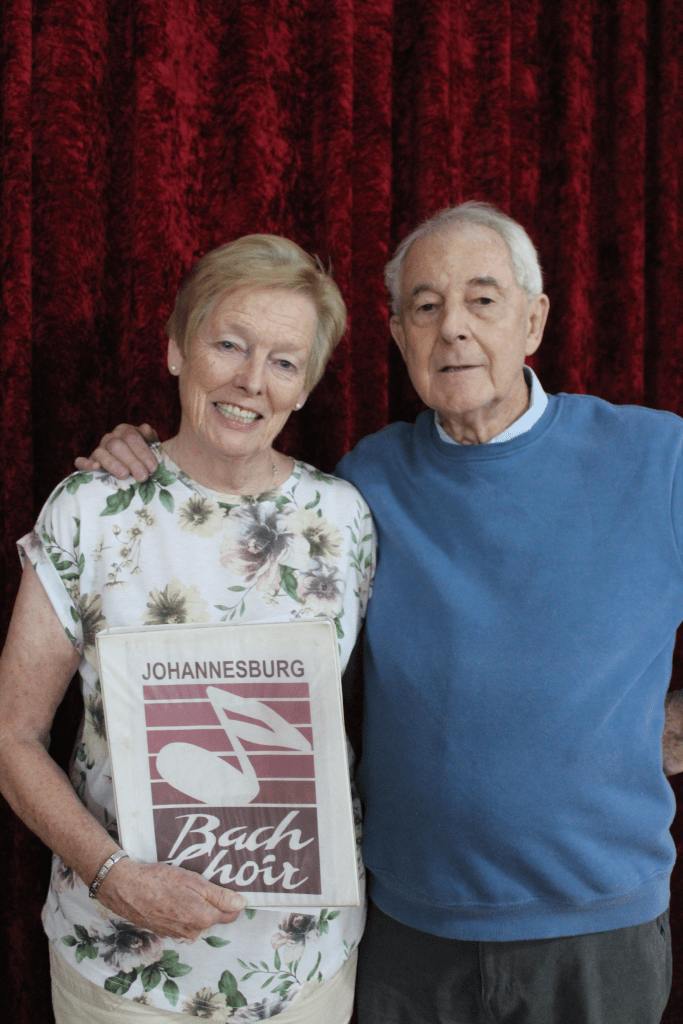
Peter and Gill Lee

Ecclesiastical, environmental, euphonious – gifts of a full life

By Monde Ngwane

Bishop Peter Lee and his wife, Revd Gill Lee, met in their 20s while they were both living in England. Gill is from central London and Peter comes from the deep countryside of Norfolk, known for its “open, flat, beautiful” land. Peter’s upbringing included boarding school, leading to an exchange year in the mid-1960s in New England, USA, where he participated in a glee club choir. He describes this experience as “an overflow of a folk culture”, contrasting with his preference for classical choral music from a young age.

Peter and Gill Lee

Peter’s path to ministry led him to become an ordained priest in London in 1973. He and Gill moved to South Africa in 1976, an historic year in which to change countries. Peter served at Christ Church, Addington in Durban. In 1980, they moved to Johannesburg and found themselves living amid the turmoil of the time as the Church sought to minister to those involved in overthrowing South Africa’s oppressive apartheid regime. Peter was drawn into (then) Bishop Desmond Tutu’s diocesan structures from 1985, serving Orchards, Alexandra, Yeoville and the Diocese of Johannesburg’s headquarters.

Chosen as the first black Archbishop of the Anglican Church of Southern Africa in 1986, Tutu was a significant figure against apartheid and a Nobel Peace Prize laureate. In 1990, Peter was consecrated Bishop of the Diocese of Christ the King in the southern parts of Johannesburg and Gauteng. He became a member of what was called “Tutu’s kitchen cabinet”, a team of trusted bishops that provided support and guidance during the national crisis.

Gill speaks French fluently and pursued a teaching career before marrying Peter in 1971. She was head of French at St Mary’s School, Waverley in Johannesburg, from 1990 to 2010 and then became the school chaplain. She was ordained a deacon in 1994 and a priest in 1995 by Peter. She served at St Mary’s but also as a priest of the Diocese of Christ the King. Despite arthritis limiting her guitar playing, she remains involved in choral singing.

Gill joined the Johannesburg Bach Choir in 2018 as a soprano, inspired by fellow soprano Jennifer Thornton-Smith. Peter, a tenor, would initially accompany Gill to rehearsals. But he joined during the COVID-19 pandemic, finding joy in participating without a leadership role. Their clerical lives are intertwined with their musical interests. Gill, who is at present secretary of the JBC management committee, has improved her music sight-reading skills and both agree they enjoy works by Handel and Bach in particular.

Gill describes the JBC’s focus on classical and Bach music as “a rarity among amateur choirs in Johannesburg”. Peter emphasises that music reflects and shapes society. He says that the choir’s evolving and diverse membership is a sound reflection of South Africa’s transition, adding that a younger and more diverse membership will be important for the choir’s long-term relevance. The couple’s grandson, Sam, attends the Drakensberg Boys’ Choir School and travels with their choir, showcasing a musical legacy passed down through the family. Peter and Gill hope the JBC continues to provide high-quality period music while representing a modern diversified society.

Peter enjoys the discipline of singing, which is a crucial part of his identity. Gill relishes the challenge of singing difficult pieces, with a rewarding recent performance of a challenging piece by CP Bach that she has unfortunately forgotten. They cherish the community and camaraderie in the choir, physical limitations of the members notwithstanding, with memorable moments including Christmas parties at choir director Tim Roberts’ home.

As with others in the choir, they love the South African “bush”. They say, “Nothing is better than getting up and going birding.” Gill also crochets and served as a director for a timeshare company.

  • The Bach Blog is the official blog of the Johannesburg Bach Choir and is edited by Theo Coggin.
  • Monde Ngwane is leader of the tenor section of the choir.
  • Please “Like” The Bach Blog. You are welcome to share this Blog, and the many others that have been written during as we celebrate our 60th anniversary. They can be found by using this link: https://johannesburgbachchoir.com/2024/08/21/the-bach-blog-2/

Kathy Whiteley

From “permission-of-husband-required” to JBC chair

By Helen Grange

It was the sublime, evocative voice of the late, great Kathleen Ferrier that struck awe into the young Kathy Whiteley. All she wanted was to sing like her.

“I asked my mother, did I sing like Kathleen Ferrier, the mezzo-soprano? Her reply was, ‘you are more a messy soprano’,” smiles Kathy.

It’s no accident that Ferrier was well known to the young Kathy; she grew up in England where the famous singer’s voice was often heard on the radio. At the age of eight, Kathy joined the local church choir and sang in it for six years. “It was very small – two young sopranos and two older ladies. We sang Evensong every Sunday.”

In 1964, Kathy and her first husband emigrated to South Africa. It was a long journey, especially for a woman six months pregnant. “We flew for 33 hours, starting at Southend (Essex, UK) to Basel (Switzerland) to Tripoli (Libya) to Kano (Nigeria) to Brazzaville (Congo) and finally, to Jan Smuts (Johannesburg).”

Kathy raised her three children before joining another choir, this time in Germiston where the Whiteleys had settled. “My two eldest sang in the junior choir at Germiston Presbyterian church and I was asked to lead the youngsters. This led to me singing in the senior choir in the evening.”

Kathy and Stephen Whiteley who now live in Mpumalanga. Kathy was the first woman to fill the post of chairperson in the Johannesburg Bach Choir.

She met Stephen, her husband, at the Presbyterian church, and after they married, they left to join the Anglican church. “We joined the Royal School of Church Music and went to their annual choir schools. This helped me with my sightreading, and I passed Trinity College Grade 4 singing.”

She and Stephen joined the Johannesburg Bach Choir together in 1983. Kathy was a first soprano, later to become JBC chairperson, and Stephen was a tenor, later becoming a tenor leader. Back then, married women were not yet their own agents in conservative South Africa’s polite society.

“We were auditioned by Dr Eberhardt Kűnkel, who refused to tell me if I had passed until he had auditioned my husband. He told me he would not accept one member of a married couple without the other, because it was a social event. I couldn’t sightread at that stage, but took up piano playing at the age of 40 to learn how to do so,” says Kathy.

At the time, the choir was performing large-scale choral works in the Johannesburg City Hall by Bach, Mozart and Beethoven, accompanied by a full orchestra. Membership was around 100 singers. Kathy was appointed to the chair in 2005 and held the seat until 2008.

One of her more unpleasant duties in this capacity was to give notice to the then choir director, Walter Butt, who had decided that instead of working with the JBC committee to boost membership, Wits music students should supplement the numbers. This didn’t go down well with the older members and it was decided that Butt should leave.

“It fell to me to hand over the letter, but Stephen volunteered to do it.  Mr Butt stormed out of the choir rehearsal and he had to be called back to receive the letter. One woman came back into the venue and cried, ‘Kathy, what have you done?’ I answered that the committee decided Butt had to go to save the choir.

“Our old friend and former music director, Colin Yorke, agreed to take on the choir and its remnants met at St Columbia’s church in Parktown. There were 25 members present and Colin was very gentle with us. Gradually old members returned and new members joined,” she recalls.

Kathy and Stephen left the choir in 2008 when they retired to Sabie, Mpumalanga. They miss the choir terribly.

  • This article is written by Helen Grange, a member of the soprano section of the choir. The Bach Blog is edited by Theo Coggin. Please LIKE and SUBSCRIBE to our Blog.

Diane Coutts

Six conductors and 60 years: Memories abound for Diane Coutts

By Marlene Ross

The Johannesburg Bach Choir has been associated with some of South Africa’s most talented musicians during the past 60 years. Diane Coutts, who has performed with the Johannesburg Bach Choir as organist, pianist and harpsichordist, twice received the SABC Artes award for best piano recordings and has also received lifetime achievement awards from the South African Music Rights Organisation (SAMRO) and the South African Society of Music Teachers (SASMT). Diane’s association with the Johannesburg Bach Choir goes back to the 1990s. She still accompanies the choir for rehearsals on an ad hoc basis.

Diane Coutts: Pianist, organist and harpsichordist extraordinaire

Born in Durban, Diane studied piano, organ and flute. Her organ tutor was Errol Slater, who was the organist at St Paul’s Church in central Durban. At one of her piano performances in Durban she was noticed by Ivey Dickson, a professor at the London Royal Academy of Music and the director of the National Youth Orchestra of Great Britain. She invited Diane to study in London from 1965 to 1966.

On returning to South Africa, she was appointed as the SABC accompanist for Natal in 1970. In 1979 she was transferred to Johannesburg as the official SABC accompanist and as member of the National Symphony Orchestra of the SABC. Diane prefers accompaniment to solo work, because it provides her with the opportunity to share her love of music with other musicians. She explains that in duo work in particular, one is able to share ideas on interpretation with fellow musicians. She has accompanied many contestants at the Unisa International Strings Competitions as well as the Unisa International Voice Competitions, including the winner of the Unisa International Strings Competition in 2010.

Referring to her many piano recordings, Diane explains that she prefers “leaving a recording as a legacy as opposed to playing in live concerts, which is just a fleeting moment in time”. As an introvert, she feels it also better suits her personality.

Apart from her work at the SABC, she also examined for Unisa and was juror for many music competitions. Diane has many qualifications in teaching, accompaniment and performance for organ, piano and flute. Her students excel in their examinations, many of them winning Unisa awards. She is still teaching and has adapted to the post-Covid online teaching and examination methods with aplomb.

In 2019, after serving the Catholic Church as organist for 60 years, she received an award from Pope Francis. Diane is still the organist at St Bonifatius German Speaking Catholic Church in Randburg.

Diane has performed with the Johannesburg Bach Choir as organist, pianist and harpsichordist with six resident conductors – Bruno Peyer, Douglas Reid, Roland Solomon, Colin Yorke, Dario Broccardo and Tim Roberts. Highlights of her performances with the Choir include playing the harpsichord solo part in the Bach Brandenburg Concerto No 5 on a locally built harpsichord for its inaugural performance, as well as the challenge of playing the Mozart Requiem on the organ, in place of a full orchestra.

Diane remains an inspiration to her students and fellow musicians and the Johannesburg Bach Choir is very proud that she is part of the choir’s journey.

Leipzig Bachfest congratulations

Image

The Johannesburg Bach Choir is delighted to receive a letter of congratulations on its 60th anniversary celebrations from the Leipzig Bachfest and the Bach Archive Leipzig. The Leipzig Bachfest is the world’s most significant Bach festival, attracting choirs from throughout the globe. We are honoured to be congratulated in this way. The letter is below.

Buck any difficulty with Bach and just love life

By Stuart Meyer*

Love of the colourful tapestry that life has to offer has led to rewarding experiences such as those of the Membership Secretary of the Johannesburg Bach Choir. From her newfound love for bowls which she began playing after retiring in 2017, to her abiding love for the world-renowned diamond corporate, De Beers, Sue has had an interesting life.

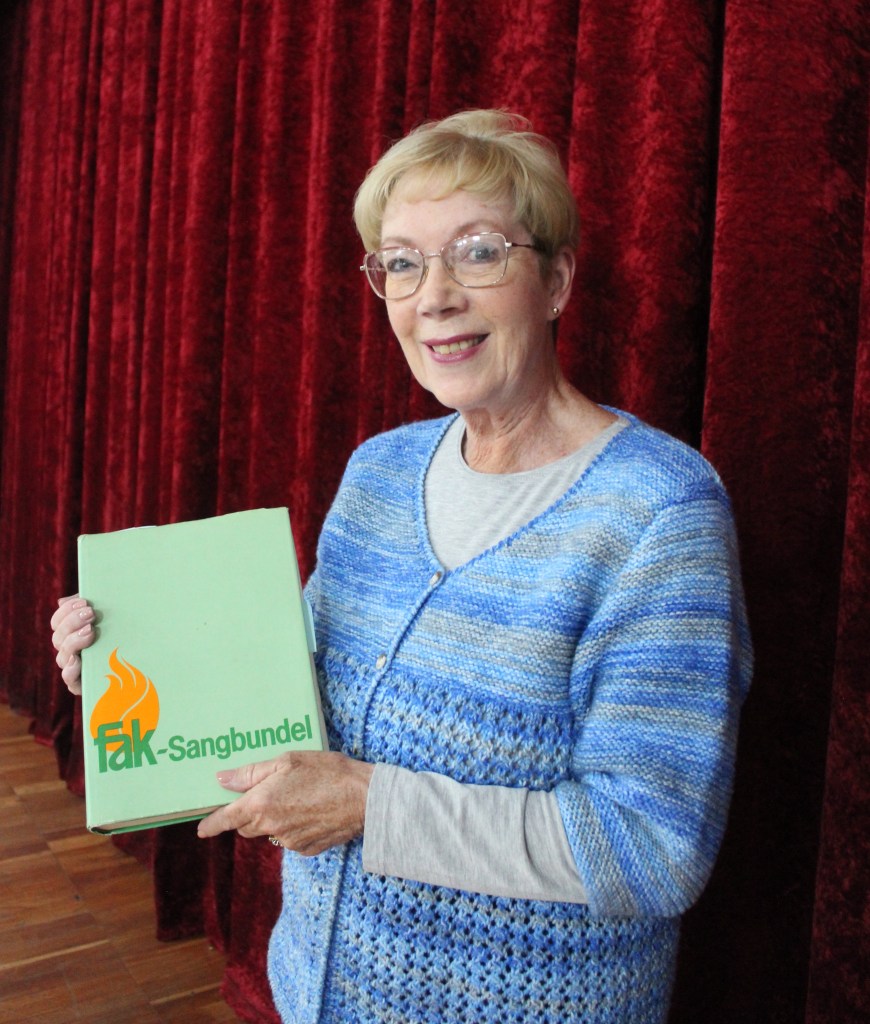
Sue’s love of music – and singing – probably began as a girl. To make the after-dinner dishwashing more fun, Sue and her three sisters sang songs from the FAK (Federasie van Afrikaanse Kultuurvereniginge) album that they had found in their home. They also sang the odd German folk song. While Sue also sang in her primary school choir, by her teens she was only interested in boys. She’d found new loves. Singing was all but forgotten.

Sue van Zyl with a modern version of the FAK (Federasie van Afrikaanse Kultuurvereniginge) book from which she and her sisters sang as youngsters. (Photo by Theo Coggin)

Joining De Beers in 1991 as an executive secretary, Sue made full use of the company’s internal learning and development programme, eventually gaining a degree in human resources management which she put to use managing the company’s bursary scheme. Sue also found training and development, especially of young people, rewarding. Despite the pressure of her roles, Sue’s love for people and learning filled her 25-year career at De Beers with purpose and delight. Her many mentorship, guidance and training activities, usually involving thorough checking of work and performance, earned her the nickname “The Principal”. Her approval was required by all and was never easy to get.

Mostly, though, Sue loved working for what she came to know as an ethical company. De Beers sought, at every turn, to do the right thing. Whether among its employees, the communities it touched, the environment or the country, Sue felt it a privilege to be part of such an effective force for good.

About 10 years ago, leafing through the advertisement section of her local newspaper, Sue spotted an ad asking, Have you ever wanted to sing in a choir? Intrigued, she responded and joined what turned out to be an American gospel music group! She loved it. Here she also heard about Capital Singers, eventually participating in seven different massed concerts in Pretoria. While these choirs re-kindled her love of singing, the logistics of the trips to Pretoria motivated her to look for a choir closer to home. Quite by chance Sue’s sister heard an interview with Tim Roberts, chatting on Classic FM with his characteristic English accent. She “heard” him talking about the “Johannesburg BUCK Choir”. It intrigued her.

She quickly discovered that Tim has an engaging British demeanour, and that BUCK in this context was actually JS Bach and had nothing to do with antelopes. As soon as she could, Sue joined even though had no experience of singing classical music. She loved it from the start. Bowled over by the camaraderie, the professionalism of Tim Roberts and Ruth Coggin’s brilliant teaching, Sue has even learned how to read music!

Classical music — and singing in a choir with various sections doing different things — also demands a level of mental alertness, concentration and discipline that she really enjoys. Sue has also grown to truly appreciate classical music and honestly looks forward to the fun, learning and beauty of Monday night practices. She means it when she says, “thank you for the music, for giving it to me!”

▪ Stuart Meyer sings bass in The Johannesburg Bach Choir

Apart from being membership secretary of the choir, Sue van Zyl sings in the soprano line

Theo Coggin is the editor of The Bach Blog. Please “like” and “subscribe” to our Blog. Send suggestions for contributions, attention Theo, to johannesburgbachchoir@gmail.com