From an early age, practise makes perfect

Her mother stopped what she was doing. Perhaps concerned at first but quickly intrigued. And then astonished by the sounds coming from her toddler’s room.

The notes being sung were as clear as crystal; the tune unmistakable. E, F#, G# – and then D#, E, E, F#, F#, G#. The words of the well-known children’s hymn sang out merrily: “Hark, hark, hark! While infant voices sing” in perfect rhythm and pitch.

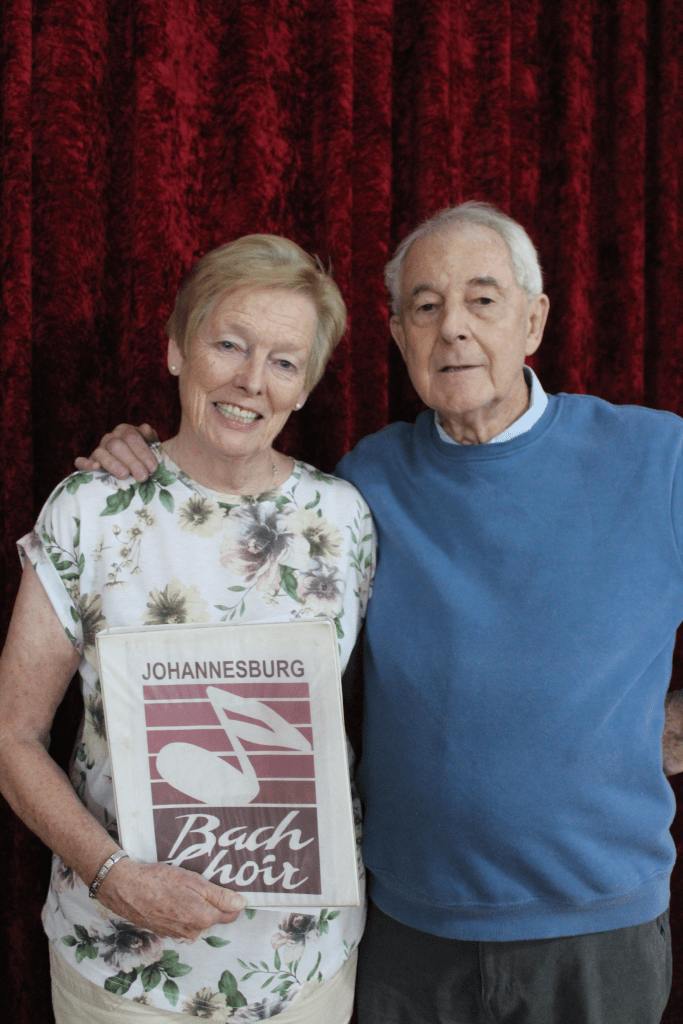
The toddler was her 18-month-old daughter, Mandy. It was the beginning of a lifetime of love of music for Mandy Collins, the recently elected chairperson of the Johannesburg Bach Choir.

Speaking about that memory of her mother’s, which she has clearly held close to her, it is not surprising that Mandy has a solid sense of pitch and can readily harmonise any tune.

“I can’t go without song. My brain speaks music. I can’t sleep for hours after choir practices. I love the community part of choir and of singing together.”

Mandy has a strong emotional bond with music, as well as an understanding of how music gives life in all its fullness. She has sung in many choirs from a young age, including an involvement in church choirs. Her understanding of God, who “I find everywhere”, is shaped by music.

“If God exists anywhere for me, it’s in music,” Mandy says.

Trained as a journalist at Rhodes, her first job was on The Sunday Times under the uncompromising editorship of Ken Owen. After several years of writing about television and radio, she left newspapers for magazines, as the features editor at True Love, under the editorship of Khanyi Dhlomo.

Mandy says she enjoys journalism and writing, “because one can ask people questions that one usually can’t ask out of politeness, and I love hearing their stories.”

But when she got to the point of being expected to train people, she didn’t feel she knew enough, and started freelancing as a writer in 1997. This was formalised in 2019 and rebranded as Red Door Ink at the beginning of this year. Entering a profession in which writing is key was surely natural for someone born to love music and singing.

Not surprising, therefore, is that Mandy loves writing songs and has written many. She began this while still at Rhodes but then stopped for many years until a friend persuaded her to get back to this art form in 2013.

She explains: “Writing copy comes very easily to me because no one sees it until the final edit. Writing a song is very personal, and it’s messy. I am also very shy about people hearing me play, so I only write when I’m inspired to, and when the house is empty.”

Shy about her music Mandy might be, but the manner in which she has confronted the challenges that life throws at one show her to be highly capable. She grew up at the height of the apartheid era and has come to believe that apartheid damaged everyone. Living in a South Africa in which institutional racial separation was a given, Mandy recalls that she had to overcome “ingrained doctrines” from that era. She soon came to an understanding that freedom from doctrinal inflexibility is critical in balancing human rights with human responsibilities.

She speaks with pride of her two daughters, the eldest of whom, Tessa, is a high school science teacher who holds an honours degree in astrophysics. Her younger daughter, Samantha, is in her final year of LLB at Wits University and is passionate about social justice. One can see Mandy the mother in her daughters’ lives.

Likewise, the lighter side of Mandy comes out when she speaks with great love and humour about her two adored dogs. The chocolate labrador, Milo – nicknamed Fungus, “because he has grown on me!” – is one of them. Chocolate labs, she says, have special needs because they are like having “fuzzy alligators” in the house. In addition, they are typical retrievers.

She also has a “staffie” called Molly, described on social media as “the belly with legs” who, when it is cold, looks like an “elderly Russian peasant woman who has seen terrible things in the gulag”. Mandy began writing about them on social media as a way of processing their quirky behaviour! Mandy loves her dogs and would miss them, but would adjust to not having them. Being without music, however, is a different story.

“I could not manage without music. Music is my life.”

Turning to her vision for the Johannesburg Bach Choir, Mandy believes that the choir is making music more accessible to a broader spectrum of people with programmes that are relevant and accessible.

Having fun while working to present a polished programme to audiences is important, as is keeping a good balance between the various voice parts.

Mandy places a premium on community building and believes the tea break during practices is a crucial part of this. She would like to see even greater cohesion in the choir, with members showing genuine care for one another, and diversity of membership continuing to increase.

Red is Mandy’s favourite colour. Clearly, with Mandy in the chair, the Johannesburg Bach Choir is in for some red-letter performances!
Bach, singing and the pipe organ: a love story on its own

In the first of his articles on Ruth Coggin, the new music director of the Johannesburg Bach Choir, Stuart Meyer traces her musical journey from her teenage years of learning to master the grandeur of a pipe organ to participating in some of the seminal historic events in South Africa

“Music gives a soul to the universe, wings to the mind, flight to the imagination and life to everything” (Plato).

For Ruth Coggin, recently appointed music director of the Johannesburg Bach Choir, Plato’s quote perfectly sums up how music brings purpose and joy to her life.

I was blessed to meet Ruth when I auditioned for the Johannesburg Bach Choir at the end of 2023. Tim Roberts, music director at that time, had asked me to warble out some sounds approximating what Ruth was playing on the piano. My performance was dire. Tim was all grace and diplomacy. Ruth’s face, however, told the truth in all its devastating clarity. And this wasn’t a good cop / bad cop regime. Despite being truly awful, Tim’s kindness prevailed and I was accepted in the choir.

Only later did I discover the extent of Ruth’s own kindness, brilliance and immense generosity.

Week after week, Ruth collared me during the Monday evening coffee break. Standing at the piano she patiently helped me hear and alter my tone between octaves and even climb and descend scales. She also made sure I practiced on the piano at home, testing my range weekly for improvement. This attention and effort, unfailingly dedicated to a single unimpressive new member of a long-established choir of over 60 people, is illustrative of the skill, kindness, commitment and attention to detail that Ruth brings to the Johannesburg Bach Choir.

Subsequently, Ruth and her husband Theo have made their home and expertise available to the Johannesburg Bach Choir’s basses (and other sections) for extra lessons on Saturdays and Sundays throughout the year. It’s a real treat to gather in Ruth’s music room, often surrounded by vases of magnificent roses for which she and Theo regularly receive prizes at horticultural shows.

Seated at either her piano or organ Ruth commands the room. For two or three hours, she will tirelessly play, listen, correct, cajole and explain. And she doesn’t miss a trick. No matter how many punters duff it around the piano, no one can hide. Ruth has the sharpest ears. A wizard of attention, focus and patience. A true and inspired teacher.  

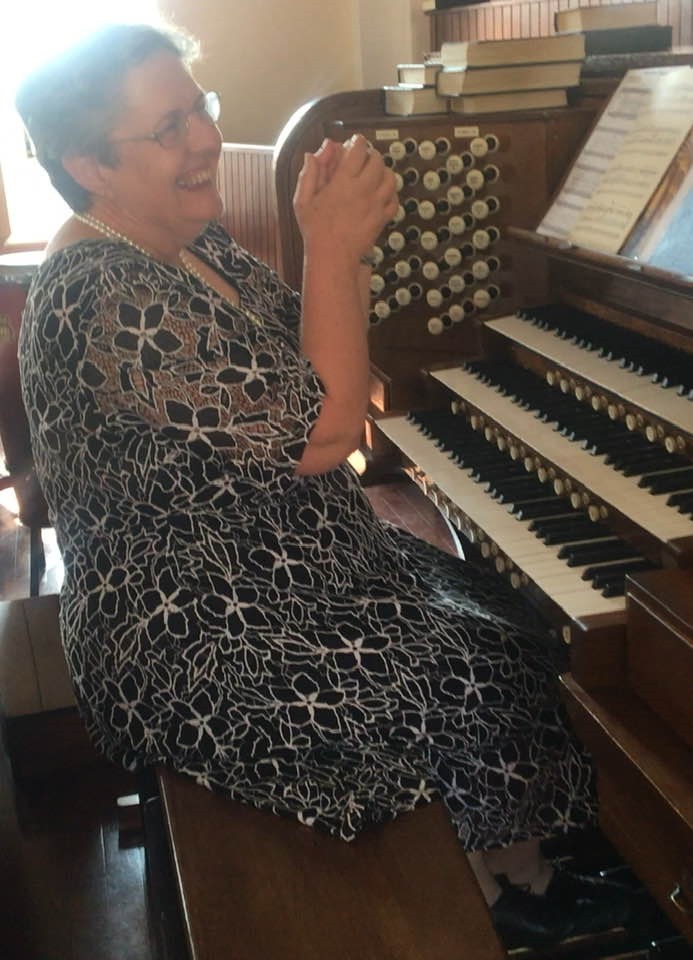
Hearing the pipe organ in a church at the age of 16, Ruth Sampson fell head over heels in love with this majestic instrument.

It was inevitable. With both parents playing musical instruments and the young Ruth learning the piano, she grew up in an intensely musical home. She remembers drifting off to sleep in bed to the sound of her parents listening to live music broadcasts from Johannesburg City Hall. Dropping off to the sound of the orchestra tuning up, Ruth remembers waking later to the waves of applause as the symphony ended. She always thought the clapping also sounded like music.

Ruth at the St John’s organ – the instrument with which she feels most ‘at home’.

Yet it was the magnificent cadences of organ pipes redolent of heaven, however, that truly galvanised her 16 year old mind. Thoroughly inspired by the celestial sounds of the organ, Ruth started taking lessons at St John’s College with the late James Gordon, music master at the College and subsequently at St Martin’s-in-the-Veld Anglican Church. James was also a magnificent tenor and sang in at least one of the Johannesburg Bach Choir’s concerts.

In those days, the pipe organ was not an instrument frequently played by girls. Explaining that every organ has its own distinctive ‘soul’, Ruth says that the St John’s College organ remains her favourite to this day.  It is the one which she feels most comfortable playing, as though she is ‘at home’. Not surprisingly it was a highlight for her to perform a Trumpet Fanfare by Purcell on St John’s organ for the JBC’s 60th anniversary concert in November 2024.

After practicing the organ every afternoon through high school, Ruth went on to a BMus degree at Wits, majoring in pipe organ, followed by an honours degree with a dissertation on the Johannesburg City Hall organ. Ruth graduated as one of only two women in her age group to study the organ professionally at Wits.

As a female pipe organist and all-rounder Ruth went on to blaze her own musical trail, defined and inspired by her characteristic enthusiasm, aplomb and plain old hard work and perseverance.   

In her student years Ruth, like many others, became deeply aware of the socio-political inequity in South Africa. On graduating, she became convinced that she could contribute to breaking down the barriers between the races in South Africa through communication, and in particular through the one institution that, at the time, facilitated such communication – the Church. As a result, she applied for a job at Dimension, the official national newspaper of the Methodist Church of Southern Africa. Appointed by the then Editor, Theo Coggin, Ruth’s career in communication began.

Her love for the organ notwithstanding, Ruth was still completing her studies at Wits when she formed a choir at what was then the student church of the Methodist Church, the Civic Centre Church. Her love of the organ and choral singing never wavered but it was clear when she left university that South Africa was not a country where playing the organ and directing choirs could sustain a living.  That said, in addition to her day job on the newspaper Ruth went on to play the organ and form and lead choirs for both the Kensington Methodist and Johannesburg Central Methodist Churches as well as the St Francis Anglican Church. She regularly fills in at other churches when organists are away and frequently plays at weddings and funerals. Indeed, she is considered the  ‘official’ organist for a wide variety of events for her extended family whenever an organist is required!

In one of her most memorable experiences Ruth was honoured to be appointed organist to accompany the Imilonji nKantu Choir that sang at the inauguration of South Africa’s first democratic President, Nelson Mandela, at the Union Buildings in Pretoria in 1994. She also played at the National Service of Thanksgiving for a democratic South Africa on the Sunday before Mandela’s  inauguration at the FNB Stadium in Soweto.

Ruth is currently the accompanist for the Lewandowski Chorale, which sings Jewish liturgical music in Hebrew, a relatively new musical challenge for her that she greatly enjoys.

  • To be continued in the next blog
  • Stuart Meyer is a member of the bass section of the JBC
  • The Bach Blog is edited by Theo Coggin. Please “like” and “subscribe” to our Blog. Send suggestions for contributions, attention Theo, to  johannesburgbachchoir@gmail.com

Monde Ngwane

Transitioning with the stars and music

By Alastair Findlay *

Having grown up in a musical family and as a member of the Salvation Army, tenor Monde Ngwane believes “the stars aligned for me” in her musical journey. Singing was central to her family and supplied the impetus for her to enroll at the Associated Board of the Royal Schools of Music graded Durban Music School. She studied music theory and the cello and played in the KwaZulu-Natal Philharmonic Orchestra. She also sang with the Durban Symphonic Choir.

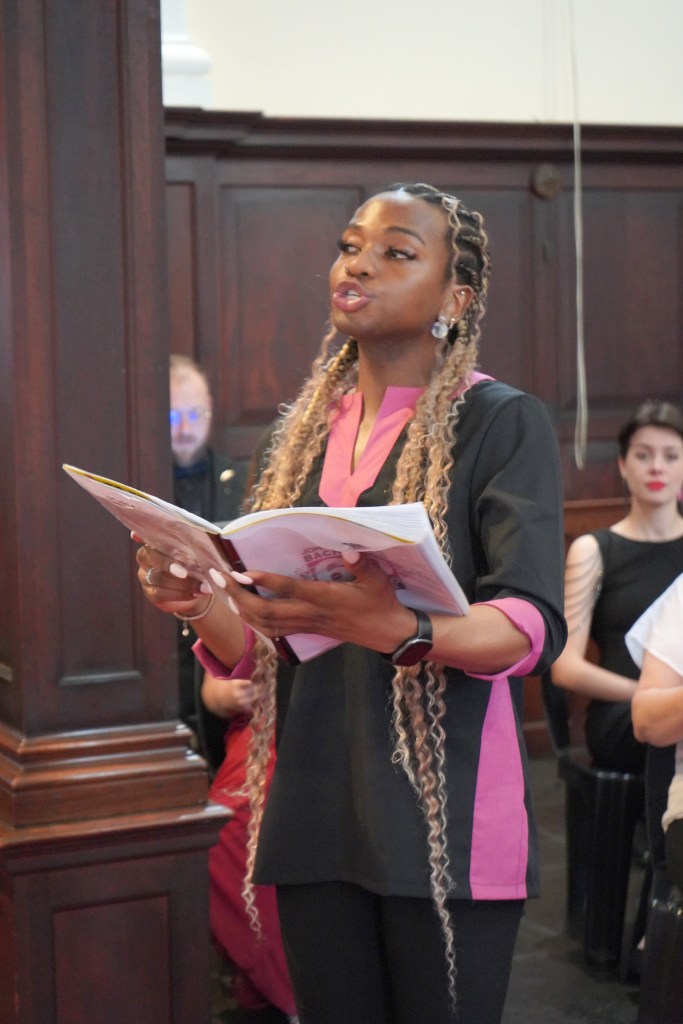
Monde Ngwane singing in the Johannesburg Bach Choir’s 60th anniversary concert in November 2024.

Not unlike many Jo’burgers whose upbringing can be traced to the beautiful rolling hills of kwaZuluNatal, Monde still calls herself a Durbanite. Despite having lived now in Johannesburg for the last three years, the ties to KZN remain strong. She grew up there with her mother who is a school principal dedicated to the development of education in rural areas, and her father who is a language practitioner involved in editing and translation work.

With her move to Gauteng she was keen to continue with choral singing. Someone in the Durban choir referred her to a former membership secretary of the Johannesburg Bach Choir, Craig Turner, who introduced her to the choir. She soon became keenly involved in the life of the choir, becoming leader of the tenor section and assisting the tenors and basses to learn their parts. Having not before had experience as the secretary of a committee, she nevertheless volunteered to act in that capacity for the 60th anniversary committee, working under the tutelage of the chairperson of the marketing committee.

As a member of the choir, she sang solo tenor passages at the June and November 2024 concerts. Monde believes that the core objective in singing together is to connect with the composer’s intentions and the work’s deeper spiritual meaning. Singing in a choir is a form of communion, an act of worship and of praise, she says.

At work, Monde is a committed environmentalist. She is currently working with the City of Johannesburg, ensuring that its climate change policies are in line with global sustainability regulations and that appropriate policies are implemented. This is challenging but rewarding work, she says.

On the personal side of her life she has been on the path of gender transitioning over the past 10 years. Part of the challenge has been to have her desired gender recognised and accepted by society and she is demonstrative and vocal in asserting her chosen identity. She embraces the African spirit of ubuntu, the understanding that “I am because you are”. In this sense, singing in a choir is the ideal manifestation of this spirit in which different parts are sung, melding together into a unified whole to the benefit and joy of all.

And what about still playing the cello? “Impossible with these for now!” she replied, flashing her nail extensions at me.

  • The Bach Blog is the official blog of the Johannesburg Bach Choir and is edited by Theo Coggin.
  • Monde Ngwane is the leader of the tenor section of the choir.
  • Alastair Findlay is the leader of the bass section of the choir.
  • Please “Like” The Bach Blog. You are welcome to share this Blog, and the many others that have been written during as we celebrate our 60th anniversary. The Bach Blog can be found at this link: https://johannesburgbachchoir.com/2024/08/21/the-bach-blog-2/

Peter and Gill Lee

Ecclesiastical, environmental, euphonious – gifts of a full life

By Monde Ngwane

Bishop Peter Lee and his wife, Revd Gill Lee, met in their 20s while they were both living in England. Gill is from central London and Peter comes from the deep countryside of Norfolk, known for its “open, flat, beautiful” land. Peter’s upbringing included boarding school, leading to an exchange year in the mid-1960s in New England, USA, where he participated in a glee club choir. He describes this experience as “an overflow of a folk culture”, contrasting with his preference for classical choral music from a young age.

Peter and Gill Lee

Peter’s path to ministry led him to become an ordained priest in London in 1973. He and Gill moved to South Africa in 1976, an historic year in which to change countries. Peter served at Christ Church, Addington in Durban. In 1980, they moved to Johannesburg and found themselves living amid the turmoil of the time as the Church sought to minister to those involved in overthrowing South Africa’s oppressive apartheid regime. Peter was drawn into (then) Bishop Desmond Tutu’s diocesan structures from 1985, serving Orchards, Alexandra, Yeoville and the Diocese of Johannesburg’s headquarters.

Chosen as the first black Archbishop of the Anglican Church of Southern Africa in 1986, Tutu was a significant figure against apartheid and a Nobel Peace Prize laureate. In 1990, Peter was consecrated Bishop of the Diocese of Christ the King in the southern parts of Johannesburg and Gauteng. He became a member of what was called “Tutu’s kitchen cabinet”, a team of trusted bishops that provided support and guidance during the national crisis.

Gill speaks French fluently and pursued a teaching career before marrying Peter in 1971. She was head of French at St Mary’s School, Waverley in Johannesburg, from 1990 to 2010 and then became the school chaplain. She was ordained a deacon in 1994 and a priest in 1995 by Peter. She served at St Mary’s but also as a priest of the Diocese of Christ the King. Despite arthritis limiting her guitar playing, she remains involved in choral singing.

Gill joined the Johannesburg Bach Choir in 2018 as a soprano, inspired by fellow soprano Jennifer Thornton-Smith. Peter, a tenor, would initially accompany Gill to rehearsals. But he joined during the COVID-19 pandemic, finding joy in participating without a leadership role. Their clerical lives are intertwined with their musical interests. Gill, who is at present secretary of the JBC management committee, has improved her music sight-reading skills and both agree they enjoy works by Handel and Bach in particular.

Gill describes the JBC’s focus on classical and Bach music as “a rarity among amateur choirs in Johannesburg”. Peter emphasises that music reflects and shapes society. He says that the choir’s evolving and diverse membership is a sound reflection of South Africa’s transition, adding that a younger and more diverse membership will be important for the choir’s long-term relevance. The couple’s grandson, Sam, attends the Drakensberg Boys’ Choir School and travels with their choir, showcasing a musical legacy passed down through the family. Peter and Gill hope the JBC continues to provide high-quality period music while representing a modern diversified society.

Peter enjoys the discipline of singing, which is a crucial part of his identity. Gill relishes the challenge of singing difficult pieces, with a rewarding recent performance of a challenging piece by CP Bach that she has unfortunately forgotten. They cherish the community and camaraderie in the choir, physical limitations of the members notwithstanding, with memorable moments including Christmas parties at choir director Tim Roberts’ home.

As with others in the choir, they love the South African “bush”. They say, “Nothing is better than getting up and going birding.” Gill also crochets and served as a director for a timeshare company.

  • The Bach Blog is the official blog of the Johannesburg Bach Choir and is edited by Theo Coggin.
  • Monde Ngwane is leader of the tenor section of the choir.
  • Please “Like” The Bach Blog. You are welcome to share this Blog, and the many others that have been written during as we celebrate our 60th anniversary. They can be found by using this link: https://johannesburgbachchoir.com/2024/08/21/the-bach-blog-2/

Marguerite Langton

Allez! The harmonics of sword and song at play

By Rosemary Padi

Members of the Johannesburg Bach Choir (JBC) come from all walks of life. That much is probably obvious. Not so obvious, however, are the fascinating array of interests (plus skills, experience, hobbies and sporting exploits) that many of our members enjoy.

Marguerite Langton, a retired diagnostic radiologist who has been a member of the choir for many years, is one such person. At present she is also a member of the St George’s Anglican Church choir in Parktown, Johannesburg.

Marguerite Langton

As a young woman, Marguerite sang soprano with the St Mary the Virgin’s Cathedral Choir in Johannesburg before moving overseas. On her return to South Africa she met the woman who was to become her best friend, coincidentally also called Marguerite, and introduce her to the Johannesburg Bach Choir in 2006. They shared a love of classical music, Latin and ballet among many other interests.

There was one other notable interest these two women shared: fencing. Competitive fencing no less!

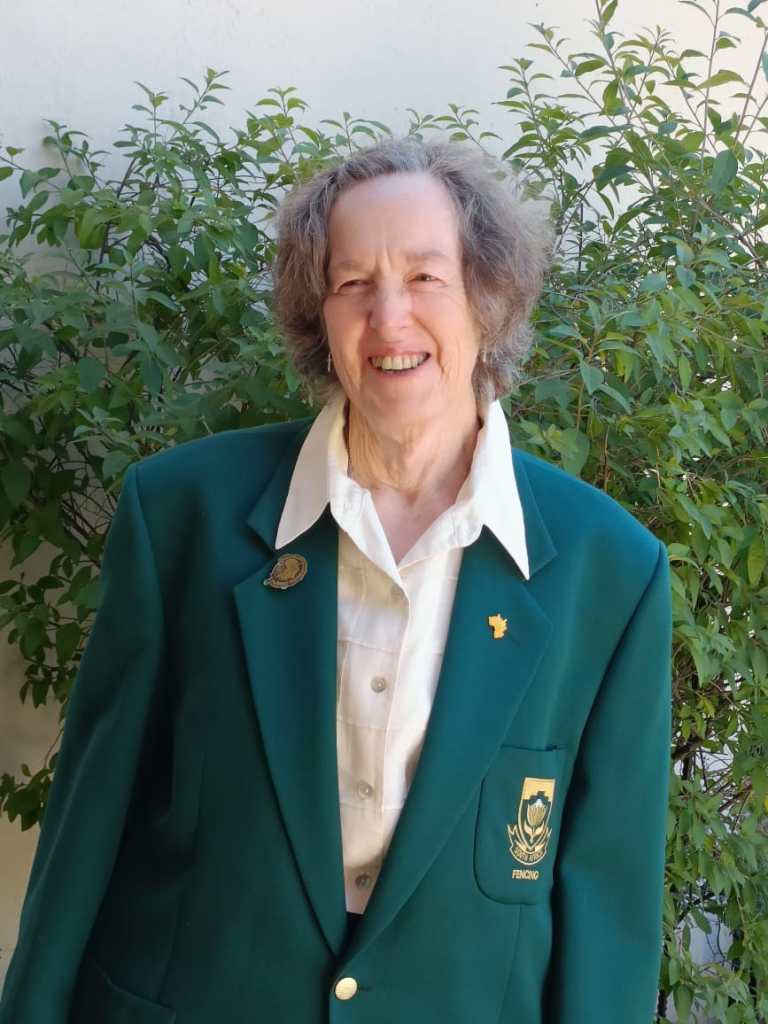
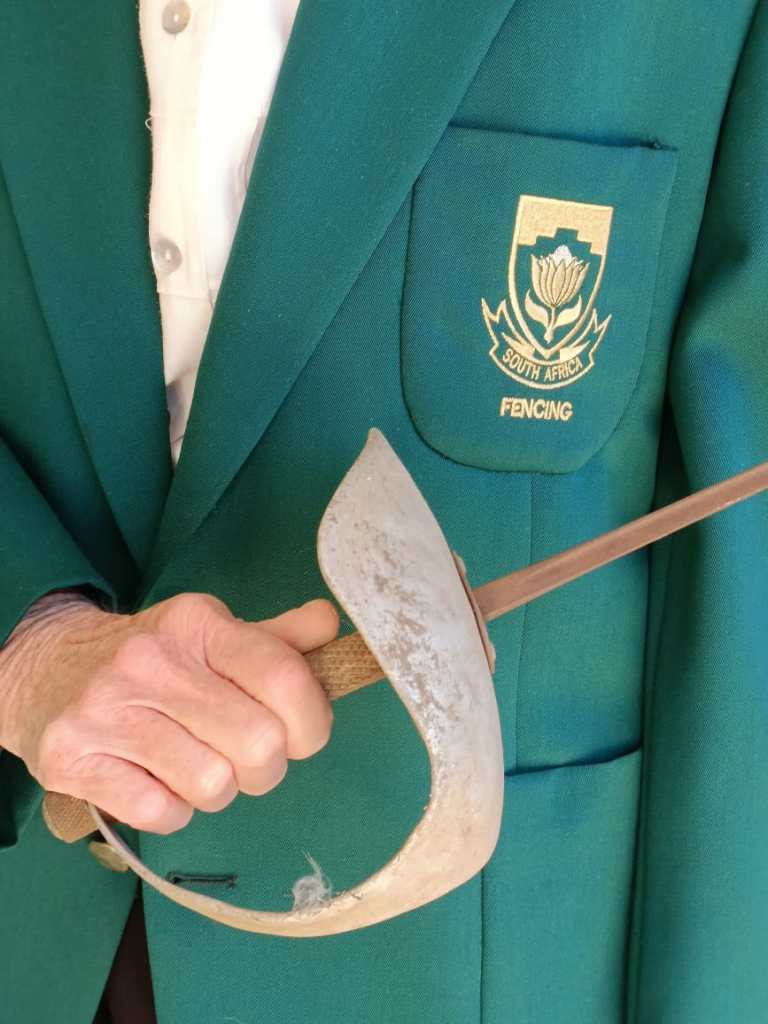
Marguerite has a distinguished record as a fencer having earned national colours on several occasions. She is proud justifiably proud of this and often wears her South African colours when she comes to practice, the green and gold making a rich background to the alto section of the choir.

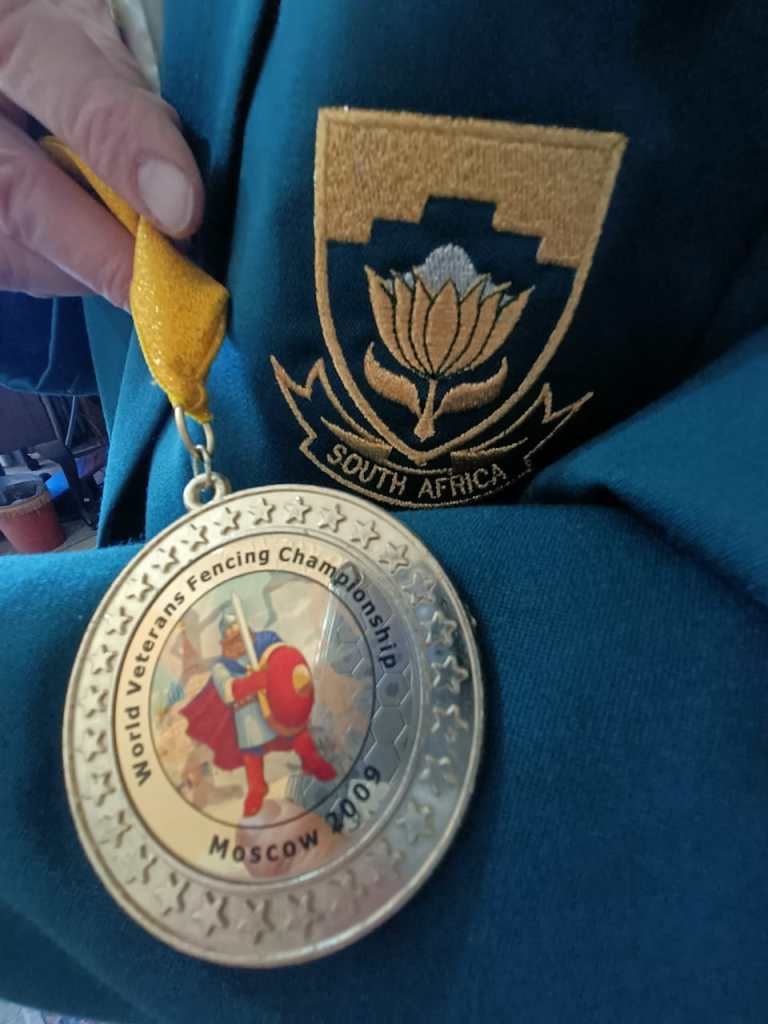
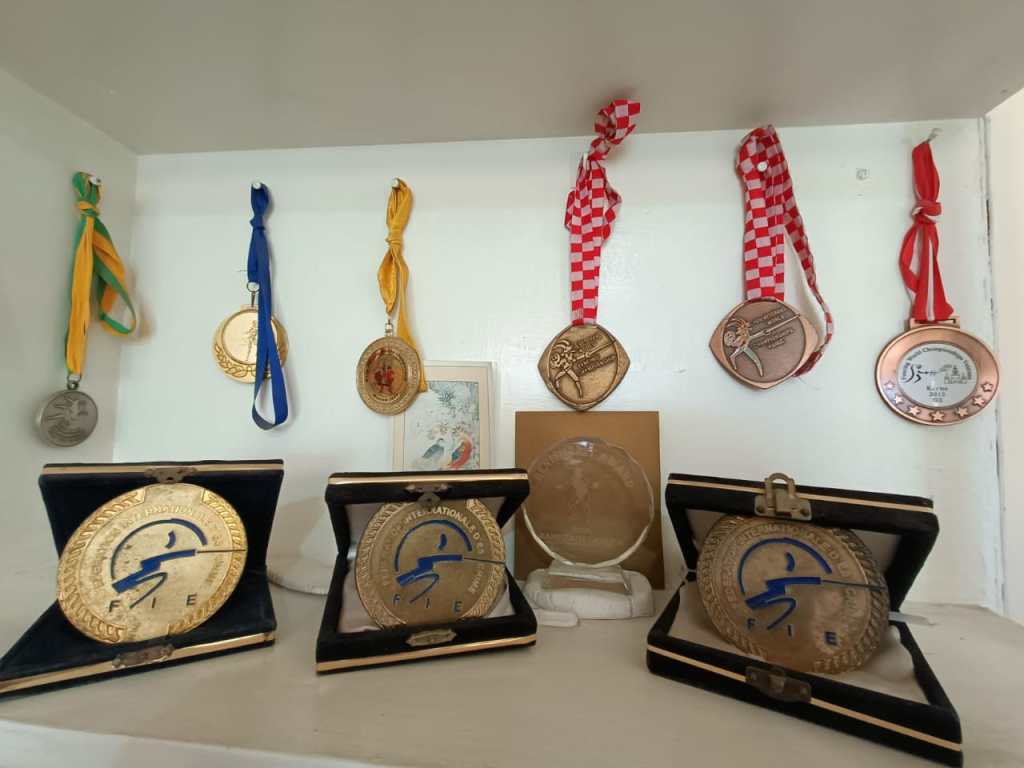
Having represented her country at two World Championships, once in sabre and the second time in foil, Marguerite won three gold medals, one silver and three bronze from the Veterans’ Fencing World Championships between 2006 and 2012, held in Scotland, Austria, France, Croatia and Russia respectively.

Her age and passion for singing will not stop Marguerite from taking part in a fencing competition, if the timing is right. She will put on her fencing attire, her choir uniform on top, go sing at the mass at St George’s and once done, take off the choir uniform and drive to the other side of the city to take part in a fencing competition.

Quietly spoken, Marguerite’s love for the choir and its harmonious sound is obvious. At the recent display of memorabilia to mark the choir’s celebration of the 60th anniversary of its first-ever performance, she was one of those bearing some fascinating material. One of these was the programme of the concert in 2006 when the JBC choir sang the Mozart Requiem Mass with Weiss Doubell’s Pro Musica Opera Chorus at the JBC’s 25th anniversary concert. The second concert of note was in 2007 when the choir sang Haydn’s Creation in St

Stithian’s School Chapel, under the directorship of Dario Broccardo.The historical roots of fencing as a contemporary sport are to be found in ancient combat practices, requiring individuals to defend themselves in serious combat situations. It has evolved into a sport with a dedicated following that requires the utmost skill, speed and quick eye. Not a sport for the faint-hearted.

Not surprising therefore that Marguerite enjoys the sport for it is clear that not much puts fear into her feisty heart. This is amply demonstrated by her allergy to bees. In spite of the allergy she will never hesitate to provide a grain of sugar with a drop of water to revive a battling bee when she sees one.

  1. The Bach Blog is published by The Johannesburg Bach Choir which this year celebrates its Diamond Jubilee with a gala concert in the beautiful St John’s School Chapel on 17 November 2024 at 4 pm.  For tickets access this link:  https://www.quicket.co.za/events/280731-johannesburg-bach-choir-60th-anniversary-gala-concert/#/
  2. This article is written by Rosemary Padi, a member of the also section of the choir. The Bach Blog is edited by Theo Coggin. Please LIKE and SUBSCRIBE to our Blog.
  3. Photos by Ruth Coggin, accompanist to the Johannesburg Bach Choir.

Kathy Whiteley

From “permission-of-husband-required” to JBC chair

By Helen Grange

It was the sublime, evocative voice of the late, great Kathleen Ferrier that struck awe into the young Kathy Whiteley. All she wanted was to sing like her.

“I asked my mother, did I sing like Kathleen Ferrier, the mezzo-soprano? Her reply was, ‘you are more a messy soprano’,” smiles Kathy.

It’s no accident that Ferrier was well known to the young Kathy; she grew up in England where the famous singer’s voice was often heard on the radio. At the age of eight, Kathy joined the local church choir and sang in it for six years. “It was very small – two young sopranos and two older ladies. We sang Evensong every Sunday.”

In 1964, Kathy and her first husband emigrated to South Africa. It was a long journey, especially for a woman six months pregnant. “We flew for 33 hours, starting at Southend (Essex, UK) to Basel (Switzerland) to Tripoli (Libya) to Kano (Nigeria) to Brazzaville (Congo) and finally, to Jan Smuts (Johannesburg).”

Kathy raised her three children before joining another choir, this time in Germiston where the Whiteleys had settled. “My two eldest sang in the junior choir at Germiston Presbyterian church and I was asked to lead the youngsters. This led to me singing in the senior choir in the evening.”

Kathy and Stephen Whiteley who now live in Mpumalanga. Kathy was the first woman to fill the post of chairperson in the Johannesburg Bach Choir.

She met Stephen, her husband, at the Presbyterian church, and after they married, they left to join the Anglican church. “We joined the Royal School of Church Music and went to their annual choir schools. This helped me with my sightreading, and I passed Trinity College Grade 4 singing.”

She and Stephen joined the Johannesburg Bach Choir together in 1983. Kathy was a first soprano, later to become JBC chairperson, and Stephen was a tenor, later becoming a tenor leader. Back then, married women were not yet their own agents in conservative South Africa’s polite society.

“We were auditioned by Dr Eberhardt Kűnkel, who refused to tell me if I had passed until he had auditioned my husband. He told me he would not accept one member of a married couple without the other, because it was a social event. I couldn’t sightread at that stage, but took up piano playing at the age of 40 to learn how to do so,” says Kathy.

At the time, the choir was performing large-scale choral works in the Johannesburg City Hall by Bach, Mozart and Beethoven, accompanied by a full orchestra. Membership was around 100 singers. Kathy was appointed to the chair in 2005 and held the seat until 2008.

One of her more unpleasant duties in this capacity was to give notice to the then choir director, Walter Butt, who had decided that instead of working with the JBC committee to boost membership, Wits music students should supplement the numbers. This didn’t go down well with the older members and it was decided that Butt should leave.

“It fell to me to hand over the letter, but Stephen volunteered to do it.  Mr Butt stormed out of the choir rehearsal and he had to be called back to receive the letter. One woman came back into the venue and cried, ‘Kathy, what have you done?’ I answered that the committee decided Butt had to go to save the choir.

“Our old friend and former music director, Colin Yorke, agreed to take on the choir and its remnants met at St Columbia’s church in Parktown. There were 25 members present and Colin was very gentle with us. Gradually old members returned and new members joined,” she recalls.

Kathy and Stephen left the choir in 2008 when they retired to Sabie, Mpumalanga. They miss the choir terribly.

  • This article is written by Helen Grange, a member of the soprano section of the choir. The Bach Blog is edited by Theo Coggin. Please LIKE and SUBSCRIBE to our Blog.